Allegory of the Cave Quotes: Plato's Timeless Insights
The Allegory of the Cave, presented by Plato in his work "The Republic," is a profound exploration of reality, illusion, and perception. It's a cornerstone in philosophical literature, and to this day, resonates with individuals seeking understanding of truth and enlightenment.
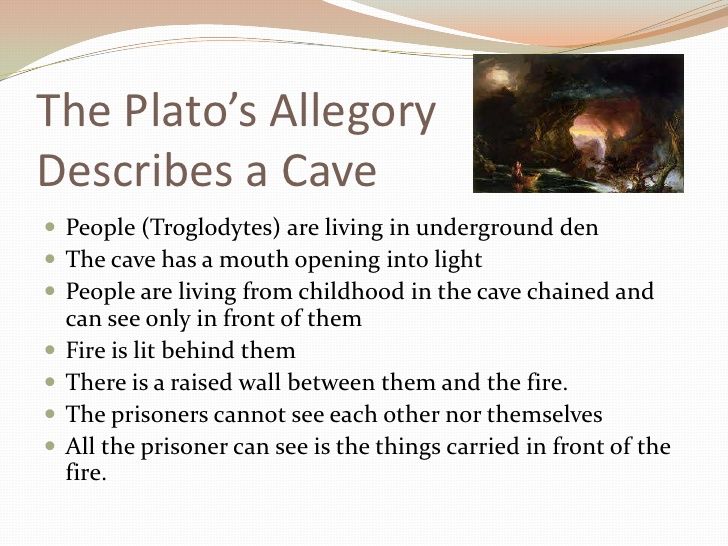
The tale unfolds in a metaphorical cave, where prisoners are chained from childhood, facing the back wall. They know nothing beyond the shadows they see, cast by objects passing a fire, carried by unseen people behind them. These prisoners mistake the shadows for reality, a notion that extends to Plato's concept of Forms or Ideas.
The World of Shadows
The prisoners in the cave perceive the world from a limited perspective, similar to how many people interpret reality. They mistake ephemeral things for true essence and never question what they see, embodying a lack of curiosity about the true nature of things.


The arrival of a stranger, who has escaped the cave and understands the true nature of reality, disrupts their pattern. Plato's point here is that encountering someone who has experienced the real world often challenges our preconception of 'reality.'
Shadows as Illusions
The shadows the prisoners see are not the real objects but their mere representations. Similarly, Plato argued that what we perceive with our senses - chairs, trees, and cars - are not the actual Forms but their imitative qualities. The real essence or Forms are eternal and perfect, invisible to the unenlightened eye.


For instance, no physical chair can be the perfect embodiment of 'chair-ness.' The Form of a chair is what we generalize about chairs but can never fully capture, much like how prisoners generalize about shadows but not actual objects.
Escape from the Cave
The enlightened prisoner, having seen the sunlit world outside the cave, returns to share the truth with his fellow prisoners. However, he faces resistance, as the others cannot fathom the existence of a reality beyond their shadows.
Here, Plato explores the difficulty in teaching or converting people to new ideas. The struggle to understand may lead to resistance or even hostility, as shown in the allegory where the freed prisoner faces scorn for disturbing their comfortable yet misguided existence.



The Sunlit World
The daylight world outside the cave represents the ultimate reality, the world of Forms or Ideas. While the prisoners found the sunlight blinding, it is actually the true light that allows us to understand reality properly.
The philosopher, having descended back into the cave after embracing the true reality, sees the shadows more clearly than before. This symbolizes that true wisdom comes from understanding the Forms, followed by practical application of that knowledge in the world of phenomenal things.
Leadership and Education
The Allegory of the Cave is often used to illustrate the role of leadership and education. Plato argues that philosophers, having seen the true reality, should return to the cave to rule and educate society, as they understand it most profoundly.


Indeed, many interpret this as Plato's proposal for a 'philosopher king' to govern society, based on an understanding of the ultimate reality. However, it also underscores the importance of education in leading societies out of the ideological 'caves' they inhabit.
Plato's Allegory of the Cave is a compelling reminder that our perception of reality may not be the truth. It emphasizes the need for constant questioning, seeking knowledge, and humility in recognizing the limits of our understanding. As we strive to see the sun outside the cave, we must also be prepared to help others make the same journey, even if resistance is inevitable.
Related Articles

The Allegory of the Cave: Plato's Timeless Visual Tale
The Allegory of the Cave, an iconic parable presented by ancient Greek philosopher Plato, has stood the test of time as a profound metaphor for the human...

Father Grigori: Timeless Quotes from Rasputin
Throughout history, spirituality has been a constant beacon, guiding individuals through life's trials and tribulations. Among the wisdom pass down through...

"The Cave Drawing: Plato's Allegory of the Cave Unveiled"
The Allegory of the Cave, depicted on the walls of Plato's Academy in ancient Athens, is a renowned philosophical allegory drawn by the Greek philosopher...
"Cave Allegory: Unveiling Names & Categories in Plato's Masterpiece"
The Allegory of the Cave, famously Дelled by Plato, is a profound exploration of perception, reality, and human nature. It's an depths metaphor, packed with...

Understanding Plato's Allegory of the Cave: A Simple Explanation
The Allegory of the Cave is one of Plato's most famous philosophical thoughts, often found in his work "The Republic". But diving straight into it can be like...

Ansel Adams' Timeless Quotes: A Celebration of Nature
Ansel Adams, the legendary landscape photographer and environmentalist, has left behind a profound legacy in the world of art and nature appreciation...