"The Cave Drawing: Plato's Allegory of the Cave Unveiled"
The Allegory of the Cave, depicted on the walls of Plato's Academy in ancient Athens, is a renowned philosophical allegory drawn by the Greek philosopher himself. This visual representation of Plato's abstract thought process is a timeless masterpiece that continues to captivate scholars and enthusiasts, shedding light on the nature of reality and the perception of truth.
Plato's Allegory of the Cave, dated around 380 BCE, is etched into the annals of history not just for its profound philosophical insights, but also for being an early example of philosophical art. It's a spectacle of symbolism, decoded through centuries, illuminating the human condition in an era devoid of digital distractions and material excess. Let's delve into the intricacies of this captivating visual narrative, exploring its historical context, core symbolism, and enduring relevance.
Historical Context and Plato's Intention
The Allegory of the Cave is a key component of Plato's masterwork, "The Republic," a Socratic dialogue discussing justice, the order and character of the just city-state, and the just man. Plato, a dialogue writer par excellence, employed the allegory to elucidate his ideas, rendering them accessible to a wider audience.


The drawing, created as an illustrative adjunct to the philosophical text, was likely simple and direct, mirroring Plato's unadorned yet profound teaching style. It served to reinforce the centrally argued concept ofthe Forms or Ideas - perfect, transcendent universals - that exist beyond the physical realm.
Plato's Drawing: A Cognitive Map of the Cave
Plato's sketch would have portrayed a cave, with a line leading out from it, and ascending stairs or a path beyond. This basic layout forms the foundation for understanding the Allegory of the Cave's narrative and symbolism. The cave, a womb-like enclosure, signifies the physical world, while the path represents the journey towards truth and enlightenment.


At the cave's mouth, Plato probably depicted the sun, symbolizing the ultimate Form - the Good. This radiant figure not only illuminates the journey but also represents the climax of Plato's 'ascent' parable, with the sun's rays drawing the individual towards the ultimate truth.
Interpretations and Variations: Artistic Renderings
In contrast to Plato's original sketch, interpretation-specific visual representations abound. Raphael's "School of Athens" and Glismann's "Allegory of the Cave" offer distinct narrative interpretations. These visual musings capture the Allegory's essence, albeit tailored by the artists' personal perceptions of Plato's intellectual puzzles.
In 1865, Jean-Léon Gérôme's "Plato and his Disciple Aristotle in the School of Athens" visually contextualized Plato's philosophical school, chalking out a preliminary layout of the Academy walls. This suppositive sketch of the Allegory of the Cave reconstitutes a tangible connection to ancient learning and thought.


Unpacking the Allegory: Layering Symbolism and Meaning
The Allegory of the Cave is a multi-layered metaphor,rutting through multiple dimensions of human experience. Maximizing interpretative flexibility, it illuminates universal truths about perception, knowledge, and reality.
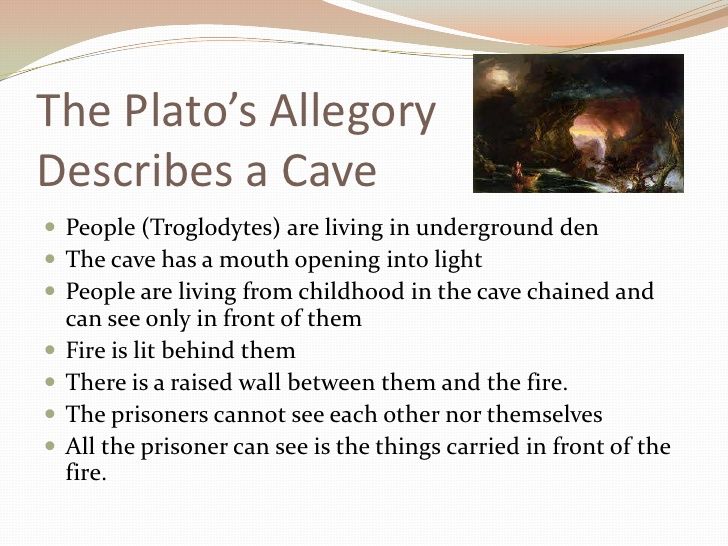
At its core, the Allegory of the Cave is a narrative of imprisonment, enlightenment, and homecoming. It's the story of men chained in a cave, watching shadows projected on the wall. When one escapes, he eventually discerns reality's true form, then returns to liberate the others - only to be rejected due to his changed perspective.
The Inmates and the Shadows
The cave's inmates represent humans, deluded by senses, rooted in ignorance, and oblivious to a higher truth. The shadows on the cave wall are their reality, an imperfect reflection of the true essence they fail to comprehend.


The captivity, initially comforting, symbolizes comfort in familiar errors and delusions. The unwillingness to see beyond the shadows reflects the human resistance to challenge personal beliefs and preconceived notions, even when faced with evidence of their falsity.
The Liberator, the Sun, and the Journey
The man who escapes the cave is Plato himself, or humanity in its inherent striving for truth. His journey into sunlight signifies leaving the ignorance of the physical world for the purity of Forms - the intellectual template underlying phenomena. Each successive moment of understanding is contrasted with the harsh radiance of the sun, blinding at first, but revelatory with duration.
The descending chain of beings, from human to animal, represents the degrees of reality's emulation; the higher the being, the more accurately it reflects the Form. This hierarchical reflection revisits the theory of Forms, outlining the degrees of resemblance between objects and their perfect prototypes.
The Allegory of the Cave continues to inspire modern philosophical discourse and aesthetic discourse. It elicits reflection on societal attitudes towards knowledge and truth, inviting introspection on our personal predilections and the{,}scattered remnants of Plato's original sketch, continue to echo through history. The drawing, along with its philosophical underpinnings, persists as a stark reminder: What we perceive as truth is not always reality.
Related Articles
The Allegory of the Cave: Plato's Timeless Visual Tale
The Allegory of the Cave, an iconic parable presented by ancient Greek philosopher Plato, has stood the test of time as a profound metaphor for the human...

Allegory of the Cave Quotes: Plato's Timeless Insights
The Allegory of the Cave, presented by Plato in his work "The Republic," is a profound exploration of reality, illusion, and perception. It's a cornerstone in...
"Cave Allegory: Unveiling Names & Categories in Plato's Masterpiece"
The Allegory of the Cave, famously Дelled by Plato, is a profound exploration of perception, reality, and human nature. It's an depths metaphor, packed with...
Understanding Plato's Allegory of the Cave: A Simple Explanation
The Allegory of the Cave is one of Plato's most famous philosophical thoughts, often found in his work "The Republic". But diving straight into it can be like...

Mermaid Cave Oahu: Hidden Wonder Unveiled
Nestled along the shores of Oahu, the fabled Mermaid Cave has captivated the hearts and imaginations of locals and visitors alike for centuries. This...

Spider Drawing Ideas for Kids: Fun & Easy Spider Crafts
Is your little oneSpider-Man's biggest fan? Or maybe they just love creating their own whimsical worlds? Either way, drawing spiders is a fun and engaging...