Welcome in ASL: Sign Language's Beautiful Greetings
Welcome to the captivating world of American Sign Language (ASL), where correspondence and expression transcend spoken words. Embarking on this linguistic journey not only enriches your communication skills but also opens doors to vibrant communities and cultures. So, let's sign in and explore the beauty of ASL together!
ASL, like any other language, has its unique set of grammar rules, syntax, andwartz, Alongside it, deaf culture fosters deep appreciation for aesthetics, creativity, and non-verbal communication. Diving into ASL feathers a blend of visual, spatial, and tactile dimensions, making it an immersive and truly unique experience.
Getting Started with ASL Basics
Before delving into the nuances of ASL, let's familiarize ourselves with some fundamental elements. Like any language, ASL begins with learning the alphabet and numbers.


ASL alphabets are fingerspelled by using each finger to represent a specific letter. Practice makes perfect in this case, as memorizing letter signs is crucial for further learning. Similarly, numbers in ASL are represented using handshape configurations, starting from one to nine (with 6-10 combined as 'sixteen' in sequence).
Fingerspelling in ASL
Fingerspelling is ubiquitous in ASL, as it allows signers to spell out anything from names to locations. Mastering fingerspelling takes time, patience, and consistent practice. Start slow, ensure clear definitions, and gradually build speed.


Many learning resources, including online platforms and apps, can help you improve your fingerspelling skills. Engage with these resources regularly, and you'll find yourself astonishingly efficient before long.
Signing Numbers in ASL
Understanding and correctly signing numbers is instrumental in ASL. It forms a building block for topics ranging from counting objects to stating ages or phone numbers. Practice number signing gestures systematically, beginning with one and progressing to ten.
Once comfortable with one-to-ten, explore larger numbers. For instance, 'twenty' is signed using both hands, with the index fingers of each hand representing a '2.' The right hand indicates the tens, and the left hand indicates the ones. Twelve, therefore, would be signed with a right-hand '2' and a left-hand '3.'


Mastering ASL Grammar and Syntax
ASL, like any other language, has its rules and structure. Understanding these fundamentals aids in constructing clear, understandable sentences.
One striking feature of ASL grammar is its word order flexibility. Sentences can begin with a noun, verb, or object, allowing for expressive and creative sentence formation. However, municipality like English, complete thoughts usually appear at the end of a sentence.
ASL Sentence Structure
In ASL, sentences typically follow an SVO (Subject-Verb-Object) order, similar to English. Consequently, the subject comes first, followed by the verb, and finally the object. For example, 'I see the cat' would be signed as 'ME SEE CAT,' with 'ME' representing the subject, 'SEE' the verb, and 'CAT' the object.


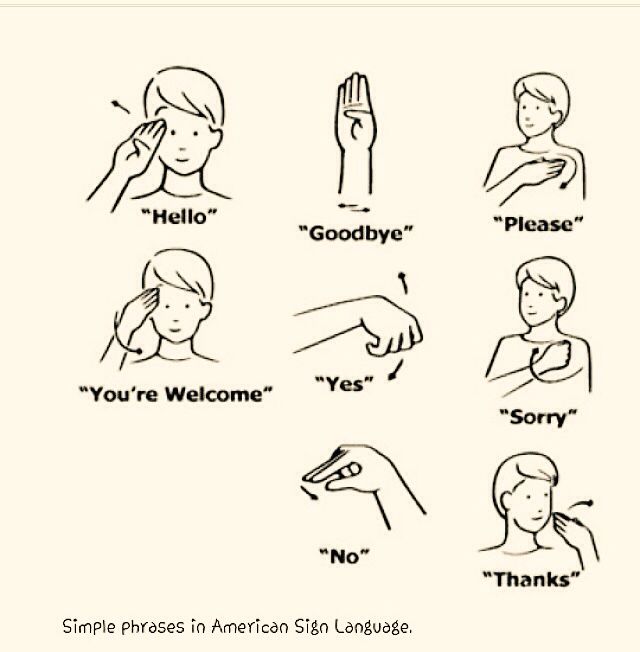


Nevertheless, casting off this conventional order can create engaging and expressive communications. For instance, starting with an object or emphasizing the verb can establish an exciting, declarative tone.
ASL Nonmanual Markers
ASL boasts unique features setting it apart from spoken languages. Among these is the use of nonmanual markers, such as facial expressions and body language, to convey additional meaning and emphasis.
Inflecting emotions, indicating negation, showing questions, and marking focus are among nonmanual markers' numerous purposes. Practice paying attention to these subtle elements in your learning journey to effectively communicate in ASL.
Embarking on your ASL journey is an exciting adventure. With dedication, curiosity, and patience, you'll grow competent in translating the language of signs into profound, heartfelt connections. So, keep practicing, keep learning, and keep signing – the world of ASL awaits!
Related Articles

"Anchorman's Welcome: Latest News Greetings"
Turning on your morning news, you're greeted by a familiar face – a news anchor. But have you ever wondered how they prepare for their day, master that...

Welcome Aboard: expressions of gratitude
Welcome to our event! You've just arrived, and we're thrilled to see you here. Your presence adds a special atmosphere, and we're grateful for your time. As we...

Venmo Sign SVG: Create Beautiful Logos
Venmo, the popular mobile payment service, has gained widespread recognition for its user-friendly interface and unique features. One such feature is the...

Christmas Greetings: Beautiful Deer Picture Card
Every holiday season, the timeless tradition of sending greeting cards to loved ones receives a delightful twist with the deer Christmas card picture. This...

Free Welcome Sign Clipart for Download
Whether you're creating digital invitations, PowerPoint presentations, or checking in with a warm welcome at the office, "Welcome" sign clipart can be an...

Wedding Welcome Sign SVG
A unique and captivating way to welcome your guests at your wedding is by displaying a stylish and personalized 'Welcome' sign. Among the many options...