Torque Wrench Conversion Chart: Accurate Tightening Made Easy
The torque wrench chart is an indispensable tool for professionals and hobbyists alike, ensuring accurate and safe tightening of fasteners in various applications. By providing precise values for different bolt sizes and torque settings, these charts simplify the process of applying correct tension to bolts, nuts, and screws. However, with the plethora of types and models available, understanding and selecting the right torque wrench chart can be overwhelming. Let's delve into the world of torque wrench charts to demystify their uses, types, and how to read them effectively.
Torque wrench charts serve multiple purposes, primarily aiding in the proper installation and maintenance of machinery, vehicles, and even household items. By adhering to the recommended torque values, users can prevent loosening, kuiten, or damage to components, ultimately enhancing safety and longevity. Additionally, these charts play a vital role in quality control, ensuring standardization in manufacturing and assembly processes.
Understanding Torque Wrench Charts
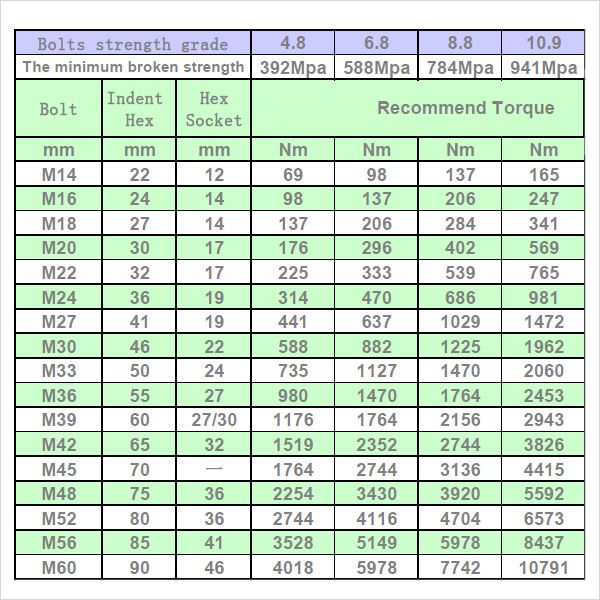
Torque wrench charts predominantly display information in a tabular format, typically featuring columns for bolt size (expressed in millimeters or inches), thread pitch (coarse/fine), and corresponding torque values in Newton meters (Nm) or foot-pounds (ft-lbs). Some charts may also include a torque conversion formula and other relevant notes, such as applicable lubricants or Disassembly sequences.


To facilitate reading and understanding, torque wrench charts often employ color-coding or shaded areas to highlight critical torque ranges. For instance, green shade may indicate the recommended torque range, while yellow and red shades might signify potential caution or overtightening zones, respectively.
Standard Torque Wrench Chart for Fasteners
A standard torque wrench chart for fasteners focuses on common bolt sizes and thread pitches, covering a broad spectrum of applications. These charts typically follow international or industry-specific standards, such as the Society of Automotive Engineers (SAE) or the International Organization for Standardization (ISO). By adhering to these standardized values, users can ensure compatibility and interchangeability of components across different equipment and manufacturers.


Standard torque wrench charts usually include rows for popular bolt sizes, such as M6, M8, M10, M12, and their corresponding thread pitches. For each combination, the chart provides torque values for different classes of bolts, generally denoted by classes 4, 5, 8, and 10, indicating varying levels of strength and stretch resistance. The chart might also include special-purpose bolts, like those used in aerospace, automotive, or marine applications, with their respective torque values.
Specialized Torque Wrench Charts
Certain industries or specific equipment may require specialized torque wrench charts to accommodate unique fasteners or application-specific torque requirements. These charts might consider factors like material composition, load-bearing capacity, or relevant international standards (e.g., DIN, JIS) to provide tailored torque values. Examples include:
- Torque charts for high-strength and exotic alloys, such as titanium or Inconel
- Charts for specific industries, like torque charts for wind turbines or civil engineering structures
- Charts for special fasteners, such as torx, star, or customized bolts
Specialized torque wrench charts may also include additional information relevant to their applicable industries, such as appropriate torque sequences, sequencing diagrams, or quality control procedures.


Selecting and Reading Torque Wrench Charts
To ensure accurate and safe torque application, selecting the right torque wrench chart is crucial. Begin by determining the specific bolt, nut, or screw size in use, and then consult the appropriate chart for your industry or application. If multiple charts apply, prioritize those aligned with industry standards or manufacturer recommendations.
Once you have identified the correct chart, locate the relevant bolt size and thread pitch in the table, and find the corresponding torque value. To prevent confusion, ensure that the torque value displays in the same unit as your torque wrench's scale (Nm or ft-lbs). If necessary, use the provided torque conversion formula to adjust the values accordingly.
Calibrating Torque Wrench Readings
Despite their accuracy, torque wrench charts rely on properly calibrated torque wrenches for effective use. Regularly checking and calibrating your torque wrench ensures that it measures and applaben torque accurately. This process typically involves comparing the wrench's readings with a known test standard or calibration tool.



To perform a rough calibration check at home, you can use a known-effect calibration weight and a suitable mechanical advantage (e.g., a lever or pulley system) to simulate the desired torque. However, for precise and reliable calibration, consider using professional calibration services or dedicated calibration equipment.
In the realm of torque application, meticulousness and accuracy are paramount. By familiarizing yourself with torque wrench charts, you can ensure consistent and safe tightening of fasteners across diverse applications. From maintaining vehicles to constructing infrastructure, the correct use of torque wrench charts streamlines processes, enhances safety, and extends the lifespan of your equipment. Make these invaluable charts your trusted companion for any task involving torque application, and reap the benefits of improved accuracy, efficiency, and reliability in your work.
Related Articles

160 Kmph to Mph: Easy Conversion Chart
Ever found yourself trying to grasp the speed limit signs while driving in a foreign country, only to struggle with converting the measurements in your head?...

24 Inches to Pixels: Easy Conversion Made Simple
Have you ever found yourself wondering how to convert 24 inches to pixels for a specific screen resolution? You're not alone. As digital designers and...

12:00 CET to 6:00 PM EST Conversion: Easy and Accurate Timezone Converter
Hello! Let's shed some light on the popular time conversion between two significant time zones: Central European Time (CET) and Eastern Standard Time (EST)...
11 Inches to Pixels: Easy Conversion Chart
Ever found yourself in a creative or technical pinch, trying to convert measurements from inches to pixels for a design project? You're not alone. In the...

851 Pixels to Inches: Size Conversion Made Easy
Ever found yourself grappling with the conversion of pixels to inches, especially when dealing with the specific ratio of 851 pixels? You're not alone. This...

80x60cm to Inches: Easy Conversion Chart
The dimensions 80 x 60 cm are commonly found in various applications such as canvas art, posters, and printer paper in European countries. However, if these...