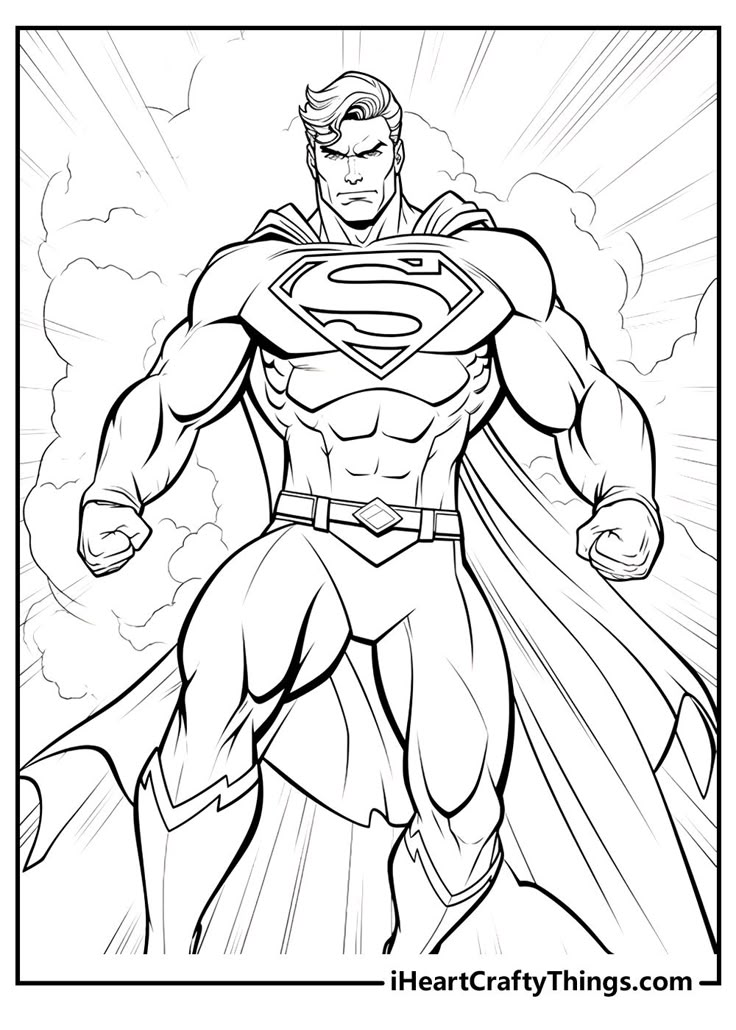
Superman: Color Your Own Hero
Embarking on a vivid journey through the realms of comics and cinema, we find ourselves drawn to one iconic figure: Superman. The Man of Steel has been gracing our screens and pages since his inception in 1938, but the color spectrum of his world was not fully fleshed out until later. Today, let's delve into the vibrant realm of "Superman in Color", exploring how his administrators, creators, and fans have conjured up a panorama of hues that paint his compelling narrative.
Superman's origin story begins in black and white, appearing in Action Comics #1 in 1938. However, it was not long before the adventures of this alien savior donned the vibrant colors of the comics page. Color was introduced in the following issue, with the iconic cover displaying Superman lifting a car while waving an American flag, setting the tone for his future empathetically patriotic image.
The Color Palette of Krypton and Earth
Superman's home planet Krypton, as envisioned by creators, is a world of blues, silvers, and reds. The Kryptonian costume, featuring the memorable "S" insignia, was initially bright red, which was later changed to blue due to the difficulty in printing consistent reds in newsprint.


Earth, Superman's adopted home, is a diverse canvas splashed with a spectrum of colors. From the fiery reds and yellows of the sun, which fuels his powers, to the vibrant greens and blues of the cities and landscapes he protects, the human world is a stark contrast to the cool hues of Krypton.
The Man of Steel's Costume: A Prism of Influence
Superman's iconic costume has undergone several revisions, each adding a new shade to his mythos. The familiar red and blue ensemble has been replaced or augmented with hues of yellow, black, and silver, reflecting the shift in artistic styles and eras. Each color holds symbolic significance, with red representing his earthly heritage and blue symbolizing his Kryptonian origins.


His costume's colors have also influenced other heroes in the DC Universe, leading to a cohesive yet distinct visual language among related characters, such as Supergirl and Superboy. This family of heroes contracting and expanding the same palette, much like a color theory experiment, creates a sense of unity among the leggy heroes of the DC multiverse.
Superman and the Rainbow of Cultural Appropriation
Superman's design has also inspired iterations in various media, with each interpretation adding a new shade to his rich tapestry. From themboxblue and gray shades of the 1940s and '50s serials to the bold, vibrant costumes of the live-action films and animated series, each version offers a unique perspective on the Man of Steel.
The 1950s and '60s TV series, for example, infused his costume with bright, primary colors to appeal to the child audience. Christopher Reeve's 1978 costume dawned a darker, more muted tone, reflecting the gothic, noirish feel of the source material. Meanwhile, the 1990s cartoon 'Superman: The Animated Series' brought back the brave, bold hues of the silver age comics, emphasizing the vibrant world of the Fortress of Solitude contrasting with the grimy, crime-ridden streets of Metropolis.


Superman in the Spectrum of Storytelling
Color in Superman's world not only denotes visual style but also influences storytelling themes. The vibrant hues of his adventures are more than just aesthetic, they are emotional cues that amplify his narratives. The tonal shifts reflect the triumphs and tragedies, the victories and losses, and the relentless ebb and flow of his endlessinskoenes.
The use of color is evident in the different eras of Superman's publication history. The Golden Age of comics (1938-1950) was marked by bright, bold primaries, reflecting the optimistic, adventure-driven stories of the time. The Silver Age (1956-1970) introduced psychedelic, vibrant hues that matched the far-out fantasy tales of the era. In the Bronze Age (1970-1985), earthier, more muted tones were employed to reflect the gritty, tangential stories of that period.
Red Son: A Crimson retirerprise
One notable exploration of color's role in Superman's lore is Mark Millar's Superman: Red Son. This alternate reality tale tells the story of a Soviet Superman, with the familiar costume hues swapped for the reds and gold of the Soviet Union. This switch in colorway prompts readers to reexamine their perspectives on power, patriotism, and heroism, casting the familiar story in an unfamiliar light.




The relocation of Superman's origin parallels the political climate of the Cold War era, challenging readers to consider whether the hero's identity is intrinsically tied to his nationality or his values. The altered color scheme serves as a powerful narrative device, mirroring the shift in political ideology and forcing readers to confront their assumptions about the Man of Steel's character and purpose.
Superman: The Multiverse of Colors
Superman's numerous adventures across the DC multiverse offer an extensive range of color palettes. From the heroic, regal hues of the 'Golden Age' to the garish, bizarre colors of the 'Dark Age' and beyond, each iteration of the character employs color to great narrative effect.
The multiverse also lends itself to experimental color work, such as the 'Infinite Crisis' storyline, where artist Alex Ross's painted covers reimagined classic Superman covers with bold, contemporary colors. The process highlighted the enduring power of color in redefining and reinvigorating classic narratives.
Superman's world is a testament to the power of color. Whether in comics, film, or television, the vibrant hues of his story have captivated generations of fans. From the noirish shadows of Metropolis to the ethereal glow of the Fortresof Soloitude, the colors of Superman's world are not merely a visual spectacle; they are the essence of his lore.
Related Articles

Meet Superman in poster colors: The ultimate guide to coloring your favorite superhero
Ever wondered how the Man of Steel's iconic costume got its iconic look? The answer lies not just in the cape and the 'S' shield, but also in the vibrant...

Superman Spyro T-Shirt: Unleash Your Inner Hero
The Superman Spyro shirt is more than just a piece of clothing; it's a symbol of nostalgic gaming culture and bold fashion statement rolled into one. Created...

Superman Logo Painting: Unleash Your Inner Hero with This DIY Art
The iconic Superman logo, a beacon of hope and strength, has been adorning the Man of Steel's chest since his debut in 1939. Painted with bold, striking...

Dye Snow Spray: Color Your Winter
Have you ever dreamt of adding a pop of color to your winter wonderland? Dye snow spray might just be the answer you're looking for! This innovative product is...

Color Your Own Leaf: Download Fun, Printable Picture to Color
Ever found yourself meticulously painting or coloring within the lines of a leaf outline, seeking to capture its intricate details and natural beauty? A...

ZenFX: Unleash Color in Your Tangle Sala
Dive into a realm of tranquility and creativity with Zen Tangle in Color, a captivating fusion of mandalas, mindfulness, and vibrant hues. This art therapy...