Draw Realistic Jellyfish Easy Step-by-Step
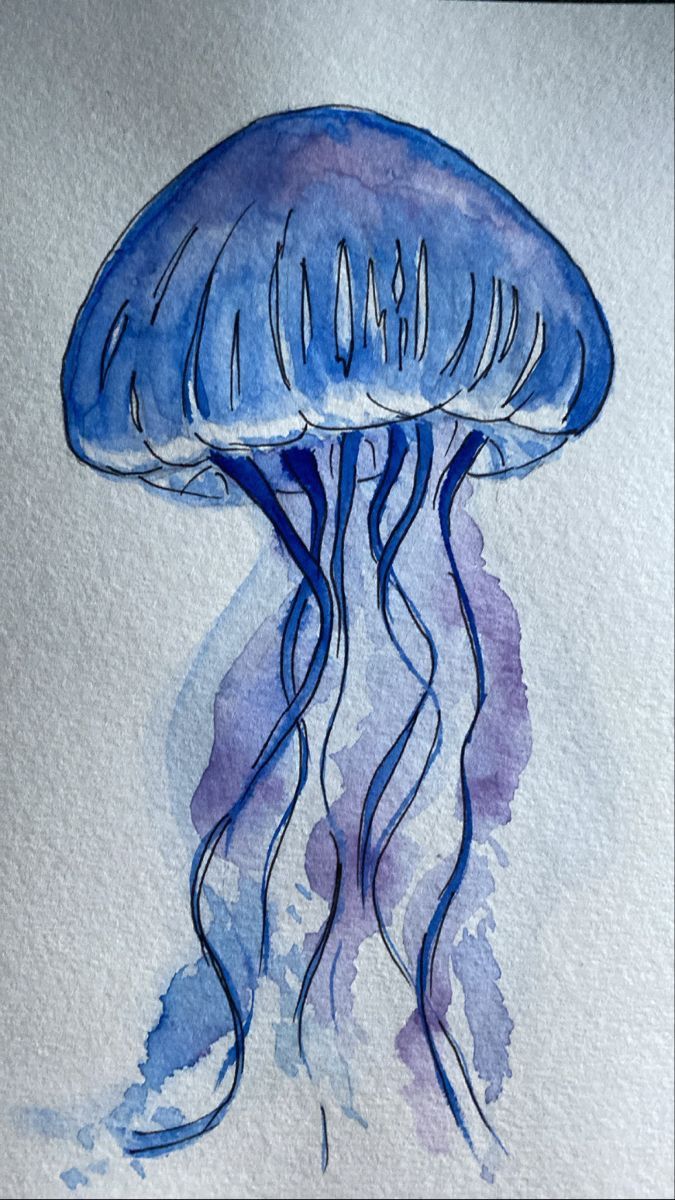
Dipping your toes into the enthralling world of marine life through art is an incredibly rewarding experience. One fascinating creature that's captivating artists and enthusiasts alike is the graceful jellyfish. With their delicate forms and ethereal movement, jellyfish provide a unique challenge and a wealth of opportunities for artistic expression. But how do you capture their realistic elegance in a drawing? Fret not, for we're about to explore a simple yet effective method to create a realistic easy jellyfish drawing that'll leave you floating on a cloud of accomplishment.
Before we dive in, let's clarify what we mean by 'realistic easy'. This tutorial aims to strike a balance between authenticity and simplicity. We won't be delving into intricacies that require advanced artistic skills. Instead, we'll focus on capturing the essence of a jellyfish using basic shapes, lines, and shading techniques. So, grab your favorite drawing tools, and let's set sail!
Understanding the Anatomy of a Jellyfish
A thorough understanding of a jellyfish's anatomy is key to portraying them realistically. Don't be intimidated, though; you don't need to memorize every detail. Instead, familiarize yourself with their basic components. Jellyfish have a bell-shaped body, trailing oral arms, and a mouth surrounded by stinging tentacles.


For our purposes, we'll focus on the bell and the oral arms. The bell is the jellyfish's main body, with the mouth on the underside. Oral arms, connected to the mouth, may vary in appearance but are usually long and thin. Some species even have tiny่วеs or bumps along these arms.
Simplifying the Jellyfish Bell
The bell is the most complex part of a jellyfish, but we can simplify it significantly. At its core, the bell is a circular body with four distinct sections: the top (ex umbrella), the edges, the bottom (sub umbrella), and the mouth region.


For ease, we'll represent these sections using basic shapes. The top will be a circle or an oval, depending on the jellyfish species. The edges can be simplified to semicircles or half-ovals, and the bottom to a simple line or an arc. Finally, the mouth region will be a small circle. Combine these shapes, and you've got a simplified jellyfish bell!
Drawing the Oral Arms
Oral arms are far simpler than the bell. They're essentially straight or slightly curved lines, often with tiny circles or ovals scattered along their length. For our realistic easy jellyfish drawing, we'll represent oral arms as lines with small ovals attached.
The number and placement of these oral arms depend on the species you're drawing. Research images of the specific jellyfish you want to replicate for an accurate representation. Once you've mastered the basic shape, you can start adding variations to make your jellyfish unique.


Bringing Your Jellyfish to Life with Shading
Shading is an essential element in creating a realistic drawing. It defines forms, adds depth, and gives your artwork that 'wow' factor. Don't worry, though; we won't be delving into complex shading techniques here. Instead, we'll focus on using basic shading methods to enhance your jellyfish's appearance.
Understanding Light Source
Before you begin shading, determine your light source. For a straightforward, realistic easy jellyfish drawing, place your light source above and slightly to the right. This will create a natural, soft lighting effect, perfect for bringing out the beauty of your subject.
Once you've decided on your light source, draw a light map on the bell, indicating where highlights, mid-tones, and shadows will lie. Remember, highlights are the brightest areas, shadows are the darkest, and mid-tones fall between these extremes.


Shading Techniques
Jellyfish have smooth, rounded forms, making them ideal subjects for gradual, smooth shading. Use a gentle, gradual touch to build up shading from light to dark. This will help you achieve a natural, seamless appearance.
Don't forget to use your chosen light source as a guide. Shadows should be darker and cooler, while highlights should be lighter and warmer. For an added touch of realism, hint at the underlying shapes within the jellyfish, such as the bell's edge or the base of the oral arms.
And there you have it! You've just explored the captivating world of drawing realistic easy jellyfish. Remember, practice makes perfect, so don't hesitate to experiment with different jellyfish species, light sources, and shading techniques. Who knows? You might just discover a whole new universe of artistic expression! Now, get out there and create some jellyfish magic!
Related Articles
Easy Jellyfish Drawing Tutorial for Kids: Step-by-Step Guide
Diving into the captivating world of marine life, drawing jellyfish can seem like a daunting task at first. However, with the right techniques and a bit of...

Mexico Flag Drawing Tutorial: Easy Step-by-Step Guide
The Mexican flag, a symbol of national pride and history, is recognized worldwide for its vibrant colors and intricate design. The History Behind the Mexican...

Learn to Draw a Dalmatian: Step-by-Step Dog Breed Art Tutorial
A Dalmatian dog drawing can be a delightful way to capture the essence of this unique breed, known for their distinct black or brown spots against a white...

"Draw a Glittering Pearl Necklace Step-by-Step"
The captivating art of drawing a pearl necklace is a combination of capturing the fluidity of strings and the lustrous sheen of pearls. Whether you're a...

Draw Santa Claus Like a Pro: Easy Step-by-Step Tutorials for Kids & Adults
When it comes to capturing the joy and wonder of the holiday season, few subjects are as timeless and beloved as the image of Santa Claus. With his jolly...

Learn to Draw Anime Smiles – Easy Steps
Ever encountered a simple yet expressive anime smile drawing that just lights up your day? Anime smile drawings capture the essence of Japanese animation...