Peter Peter Pumpkin Eater Color Page
The Peter Peter Pumpkin Eater rhyme is a classic that's been tickling children's imaginations for generations. But have you ever wondered about the intriguing color connections hidden within this fun poem? Let's delve into this fascinating topic, exploring how color theory intersects with this beloved nursery rhyme.
As we embark on this adventure, remember that colors aren't just mere words in a poem; they speak volumes about emotions, cultural significance, and even our perception of the world. So, buckle up as we unravel the vibrant layers hidden within the Peter Peter Pumpkin Eater color page.
Colors in Nursery Rhymes: More Than Meets the Eye
Nursery rhymes, like Peter Peter Pumpkin Eater, are not just simple children's poems. They often carry deep cultural and historical significance, reflected in the words and, yes, even the colors used. Let's explore this further.


Colors in nursery rhymes can evoke certain emotions, showcase cultural leanings, or even provide subtle clues about the story's setting. In the case of Peter Peter Pumpkin Eater, colors play a significant role in painting a vivid picture in our minds, immersing us in the whimsical world of the poem.
Yellow: The Pumpkin's Friend
The poem's central image - a pumpkin - is, of course, yellow. But why does that matter? Yellow is often associated with happiness, warmth, and joy. It's no coincidence that pumpkins, the embodiment of autumn's cheer, are bright, bold yellow.


But did you know pumpkins were also once a symbol of fertility and plenty in ancient cultures? This adds an interesting layer to the poem, hinting at the bountiful harvest and prosperity that autumn brings, even if it's subconscious.
Green: Nature's Dominant Hue
Green is another prominent color in the rhyme, seen in the 'green grass' where the narrator's wife 'ran away'. Green is nature's dominant color, and its calm, soothing presence in the poem may symbolize a return to simplicity or a rejection of societal norms (the woman leaving her husband).
But green also has darker connotations. In literature, it can sometimes represent jealousy or envy, as seen in the phrase 'green with envy'. This opens an intriguing interpretation of the poem, suggesting a tinge of rivalry or discontent within the story.


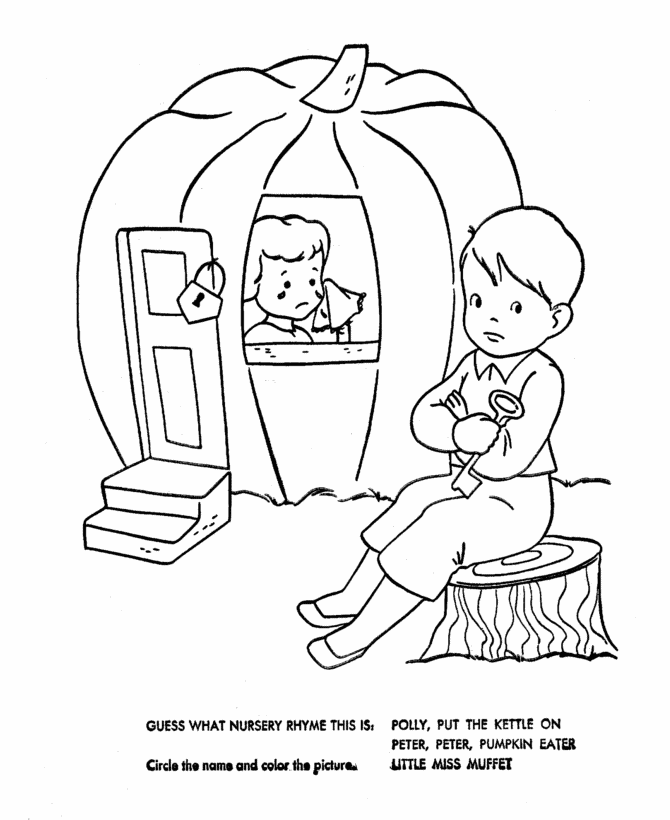
Coloring the Story: A Personalized Approach
Coloring books based on nursery rhymes, like Peter Peter Pumpkin Eater, offer more than just a fun activity. They engage children with storytelling while fostering creativity and fine motor skills. But did you know they can also teach kids about color theory and emotion association?
By allowing children to color the characters and objects in their own way, they learn to express themselves through color choices. This personalized approach enhances their understanding of the story, as they infer meanings and emotions from their selections, making the experience all the more meaningful.
Color Psychology and Storytelling
Color psychology, the study of how colors affect our moods and behavior, is a fascinating field that intersects beautifully with storytelling. In a Peter Peter Pumpkin Eater coloring page, kids aren't just filling spaces; they're interacting with the characters' emotional states and the narrative itself.


For instance, if a child colors Peter's pumpkin house bright blue instead of the traditional orange, it might reflect their association of blue with sadness or loneliness. This could be an indication that they interpret the poem differently, perhaps finding it lonelier than we'd typically assume.
Embarking on this color journey with your little ones can lead to insightful discussions about the rhyme, emotional understanding, and even early exposure to color theory. So, grab those crayons and let the coloring - and learning - begin!
Related Articles

Minecraft Steve Color Palette: Unleash Your Imagination
Unleash your creativity and dive into the vibrant world of Minecraft with "Steve's Color Page", a mesmerizing online platform that allows you to customize your...

Cupcake Color Page: DIY Frosting Ideas
Whether it's for a child's birthday party or a cozy afternoon tea, cupcakes have always been a beloved treat. But what makes them even more special? The...

Add Halloween Magic: Color Your Own Spooky Scene
dismissed as simple fun, but Halloween coloring pages, especially those featuring addition themes, offer a creative and educational way to engage children in...

Pocoyo Color Page: Free to Print & Colour
Get ready to indulge in some fun and creative activity with your little ones, or even give in to your own artistic side, with our collection of coloring pages...

Color Your Own Jack O' Lantern: Fun Pumpkin Coloring Pages
As the leaves turn and the air grows crisp, there's one surefire sign of fall: the annual resurgence of Jack O' Lanterns. These iconic carved pumpkins aren't...

Peter and John Coloring Page
Immerse your child in the enriching world of Bible stories with our engaging and educational Peter and John coloring page. Designed with intricate details and...