Stone Derived Names: Hold and History
In the realm of the symbolic and literal, the Onomasticon has long been a captivating field, especially when it revolves around the timeless and resilient, such as a name that means stone. Let's delve into the potency and historical significance of such names.
Names deriving from the word 'stone' evoke toughness, resilience, and grounding, making them prominent in various cultures and languages. From the ancient Romans to the early Germanic tribes, these names have stood the test of time, reflecting their societies' interconnectivity with the natural world.
Latin Names: Strength and Fortitude
Ancient Romans were renowned for their practical and direct naming conventions, with many names derived from nature, including stones. 'Petra', meaning stone, is one such example, shared with the biblical figure St. Peter, who was also known as Cephas, derived from the Greek 'Petros' or 'stone'.


Another notable name is 'Lapis', originating from the Latin for 'stone'. While commonly associated with luxury (think of a 'lapis lazuli'), it served as an early form of residential address for Roman families, alluding to the vernacular for 'stone' or 'rock'.
English Stones
In the English language, 'Stone' remains a popular surname, with numerous certo Horto or 'stonehouse', a derivative of Slot, being mentioned earlier. Variations like 'Stones' and 'Stons' also exist, highlighting the adopters' proximity to such structures or their profession in stonemasonry.


Furthermore, various locations and landmarks bear the name 'Stone', as in Stonehenge, a prehistoric monument in Wiltshire, England. The name reflects the primary building material, echoing the enduring appeal of stone in human history.
Germanic and Norse Roots: Stone and Power
In Norse mythology, countless stones and giants played significant roles, forming associations with strength and power. Names like 'Sten' and ' Steen' from Scandinavia bear testament to this, with 'Sten' meaning 'stone' and ' Steen' a variant of 'sten'.
The Germanic 'Stein' and its variations also stem from the same root, with notable bearers including Albert 'Stein' Einstein, symbolizing the intrigue and resilience stone-named figures bring to their respective fields.


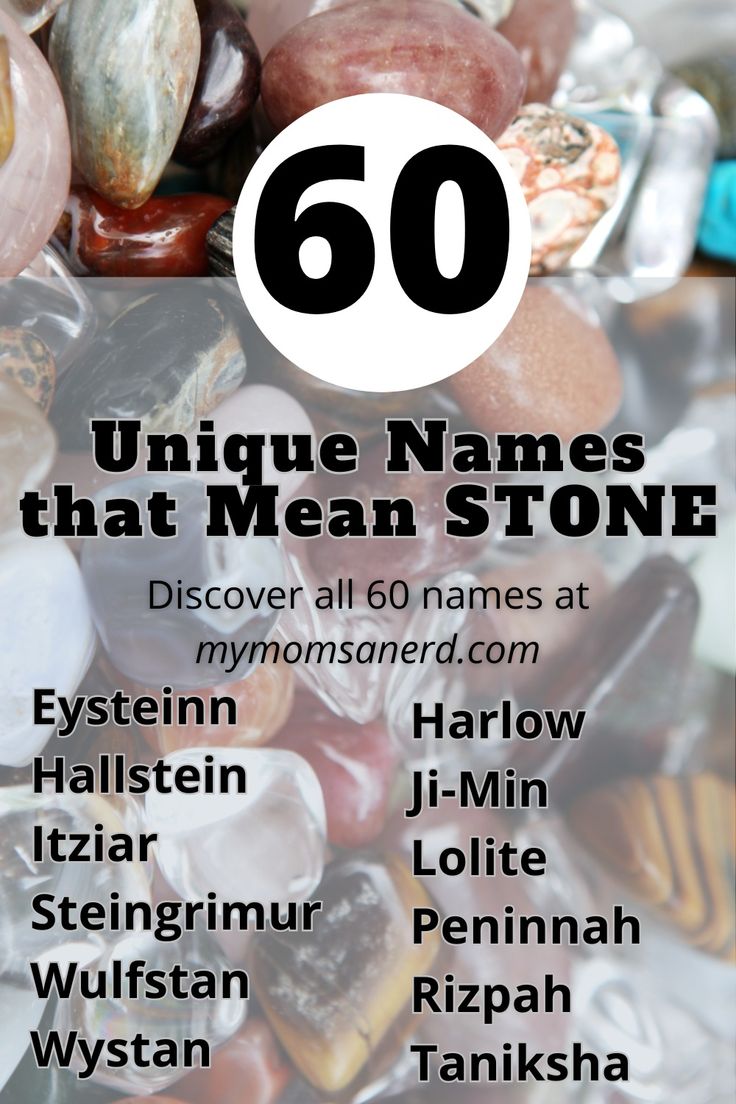


Unique Interpretations
Some names mean 'stone' indirectly, such as 'Errna' from an Old Norse word meaning 'skerry' or 'rocky islet'. Similarly, 'Yain' and 'E Františku' (meaning 'Franciscan stone'), while unique, share the stone connection.
In the realm of geology and science, numerous stones have inspired names, like 'Nephite' from the Greek 'nephos' meaning ' cloud', referring to a type of limestone or 'Talcot' derived from the mineral talc.
Understanding the etymology of names that mean 'stone' offers insight into the cultures and historical contexts that shaped them. From the Romans' practicality to the Norse's reaching for power and strength, these names reflect humanity's enduring fascination with the earth's most fundamental elements.


Related Articles

Mystical Names: Discover Illusory Meanings
Ever found yourself drawn into a world that seemed too good to be true, only to realize it was an illusion? Names that evoke this sense of deception and...

Starlight's Significance: Names That Reflected the Cosmos
Have you ever stood beneath the vast, twinkling canopy of the night sky, marveling at the countless stars that dot the darkness? Each of these celestial bodies...

Discover Names That Mean Leader
The etymology of names is a fascinating realm that connects us to our roots and personal history. One name that holds significant interest is 'Leader', which...

Ocean Girl Names: Meanings and Ideas
Are you searching for a unique and captivating name for your baby girl with a strong connection to the ocean? Look no further! The ocean, brimming with...

"Eponyms: Names That Mean 'Fool'"
In the expansive realm of language and lore, numerous epithets are employed to describe a fool. These terms, often found in literature, folklore, and even...

"Unveil Names that Mean Friend"
Finding a name that means friend can be a delightful journey, echoing the wonderful bond you share with those nearest and dearest to you. These names can be a...