Metal Roof Components: Essential Elements and Materials
Metal roofs, known for their durability and longevity, have gained significant popularity in both residential and commercial sectors. These robust systems are composed of several components, each playing a vital role in their performance, longevity, and aesthetics. Let's delve into the key components that make up a well-rounded metal roofing system.
Before we explore the intricacies of each component, it's essential to understand that metal roofs can be composed of different base metals like steel, aluminum, or copper, each with its unique properties. Regardless of the base metal, these roofs share common components that ensure they function effectively and efficiently.
The Metal Roofing Panels
The panels are the most visible components of a metal roof. They come in various profiles, such as vertical seam, standing seam, and metal shingles, each designed to emulate different architectural styles. The panel's design affects its aesthetics, strength, and resistance to wind uplift.


Metal roofing panels can be custom ordered to match specific colors and styles. They are typically coated with a layer of protective paint, which not only enhances their curb appeal but also helps prevent rust and corrosion. This coating is crucial as it extends the lifespan of the panels, making metal roofs an excellent long-term investment.
Coil Stock
Coil stock refers to the metal coil from which the roofing panels are manufactured. The coil's quality and the metal's gauge significantly impact the final panel's performance. Typically, the gauge number refers to the metal's thickness, with lower numbers indicating thicker materials. For instance, 24-gauge is thinner than 22-gauge, which is thicker and stronger.


Quality coil stock ensures that the metal panels maintain their structural integrity and resistance against extreme weather conditions. It also guarantees that the panels can be stamped, bent, and shaped into the desired profile without compromising their strength.
Paint Coating
The paint coating is a crucial component that protects the metal substrate from environmental damage and extends the roof's lifespan. The coating typically comprises a primer, a base color coat, and a topcoat with special properties like fade resistance and resistance to chalking.
High-quality paint systems, such as Kynar 500 or H већиdecoat, offer excellent adhesion, minimum fading, and chip resistance. They also come with warranties varying from 20 to 50 years, providing peace of mind in terms of the roof's longevity and performance.


The Support Structure
The support structure, or the substrate, is the base on which the metal roofing panels are installed. It plays a crucial role in the roof's overall performance and longevity. Without a proper support structure, the metal panels might buckle, warp, or leak due to insufficient support.
In new roof installations, the support structure is typically made of wood or steel. In existing roof replacements, it may consist of the existing roof deck or truss system, provided it is structurally sound and capable of supporting the additional load of the metal roof.
Roof Decking
Roof decking, or roof sheathing, is the wooden surface on which the metal roofing panels are laid. It provides a flat, even surface for the panels and acts as a vital barrier against weather elements and pests. Decking is usually made of plywood or oriented strand board (OSB).




The quality and thickness of the decking directly impact the roof's performance. ENERGY STAR-rated products, for instance, offer better insulation properties, reducing energy consumption and heating/cooling costs.
Underlayment
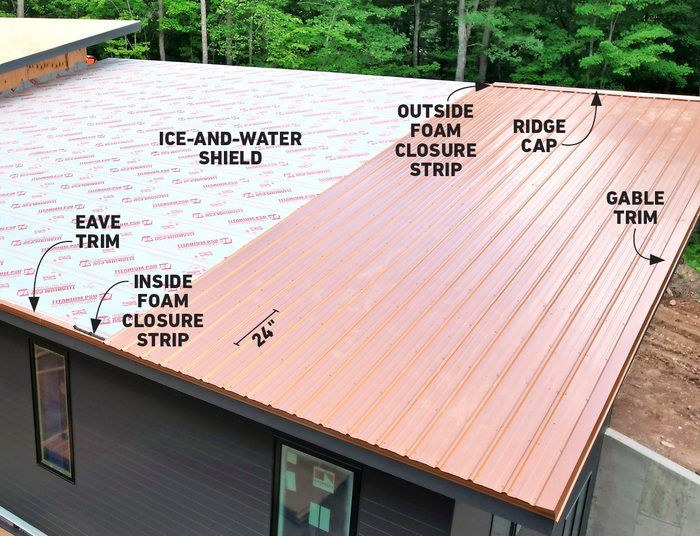
Underlayment, also known as roofing felt, is a waterproof barrier laid between the roof deck and the metal roofing panels. This component protects the roofing system from potential leaks and moisture damage during construction or until the roof is installed.
Different types of underlayment are available, including synthetic underlayment and organic underlayment. Synthetic underlayment, made of plastics like polyethylene, offers better resistance to wind, weather, and foot traffic, enhancing the overall roof system's performance.
The Flashings and Edgings
Flashings and edgings are essential components that protect the roof's perimeter, penetrations, and transitions. They prevent water leakage at vulnerable areas like rakes, eaves, dormers, valleys, and around chimneys and vents.
Metal roof flashings are typically made of the same base metal as the roofing panels. They are designed to integrate seamlessly with the roof's profile and provide a durable, leak-free barrier against the elements.
Drip Edges
Drip edges are flashed installations at the roof's edge, extending below the roof line. They prevent water from infiltrating the roof's edge and leaking into the building's interior. Drip edges also help direct water away from the building's facade, reducing the risk of water damage and splash back.
Drip edges are usually made of metal and come in various styles to match the roof's profile. They can be continuous or separate, depending on the roof's design and manufacturer's recommendations.
Valley Flashings
Valley flashings are installed where two roof planes intersect at a low angle. They direct water away from the roof's highest point and prevent it from accumulating at the intersection and potentially causing leaks.
Valley flashings can be made of metal or other flexible materials. They are typically installed under the shingles or panels to ensure a tight seal and prevent moisture intrusion. The type of valley flashing depends on the roof's design, pitch, and the manufacturer's recommendations.
Smooth, uniform, and well-sealed edges and transitions are vital to ensuring a leak-free, durable metal roof system. The quality of the flashings and edgings, their installation, and how they integrate with the other components significantly impact the roof's longevity and performance.
Maintenance and Care
While metal roofs require minimal maintenance compared to other roofing types, regular inspections and care are crucial to ensure their longevity and optimal performance. Routine checks, especially after severe weather events, help identify any potential issues early, preventing costly repairs.
The primary maintenance tasks for metal roofs include inspecting and cleaning the gutters, ensuring proper attic ventilation, checking for and addressing any signs of corrosion, and replacing damaged or missing panels if necessary. Proper maintenance not only extends the roof's lifespan but also preserves its aesthetic appeal and energy efficiency.
Investing in a quality metal roof encompasses more than just the panels themselves. It involves selecting high-quality components, ensuring proper installation, and maintaining the roof over its lifespan. Each component plays a crucial role in the roof's performance and longevity, contributing to its overall value and appeal. With the right components and proper care, metal roofs can last a lifetime, offering lasting protection and aesthetic beauty to your home or business.
Related Articles

Metal Roof Parts: Essential Components for Durability & Longevity
Embarking on a journey to upgrade your roofing? Metal roofing, renowned for its durability, longevity, and aesthetics, has captured the hearts of homeowners...

Metal Cabinet Secrets Unveiled: Essential Tips for Unturned in UnReal Engine
Uncovering the metal cabinet in the attic was an unexpected archeological find. Its rusted lock and weathered exterior hinted at a tale hidden within, waiting...

Mastering Metal Weathering: Essential GIMP Brushes
Discover how metal weathering gimp brushes can transform your digital artwork, adding realistic textures and age to your designs. These versatile tools are...

Design Your Word Entertainment Logo: 10 Essential Elements
Word entertainment logos are not just visual representations; they are the silent brand ambassadors of companies, striking at the first glance, and leaving a...

Metal Roof Pictures: Stunning Visuals & Inspiration
Metal roofing has taken the construction industry by storm, and for good reason. Durable, long-lasting, and adding a stylish touch to your home's exterior...

Laboratory Elements: Essential Tools for Research
Laboratory equipment, also known as laboratory ware or labware, is a broad category of apparatus used in scientific research, experiments, and analysis. These...