Mapa Mental vs Conceptual: ¿Cuál Usar?
A mapa mental or conceptual map, often referred to as a mind map or concept map, is a visual diagram that organizes information in a hierarchical structure around a central key thought or idea. It's a powerful tool that helps individuals understand, remember, create, and communicate complex ideas by showing relationships among concepts. Let's delve into this versatile learning and problem-solving technique.
Derived from the seminal work of psychiatrist Tony Buzan and later expanded upon by educators and thinkers like Novais and.array ([Buzan, 1974],[Novais &.execute, 1985]), the concept map has evolved to become a universal means of representing knowledge, fostering creative thinking, and enhancing learning.
Understanding Mapas Mentales
A mapa mental begins with a central idea, from which radiating branches, called main themes, stem out. These branches further branch out into sub-themes, and so forth, creating a visual hierarchy. Each node is linked to its neighbors with connecting lines, and keywords or phrases, along with any relevant images or symbols, are used to represent each concept.


Using curves instead of straight lines, colors, and images makes mapas mentales engaging and easy to understand, promoting a holistic view of information. They're often used in education, business, and personal development to foster creative thinking, problem-solving, and decision-making.
Creative Thinking and Idea Generation
Mapas mentales stimulate creative thinking by encouraging users to connect seemingly disparate ideas, generating new insights and perspectives. They break the traditional linear thinking process, allowing thoughts to flow naturally and freely, fostering innovation and original thought.


For instance, brainstorming a new product launch could involve creating a central node around the product, with main themes like 'features', 'target audience', and 'marketing strategies'. Sub-themes and connecting lines can help flesh out these ideas, leading to a comprehensive and creative plan.
The Role of Mapas Mentales in Learning
In education, mapas mentales help students grasp complex concepts by breaking them down into manageable chunks. They visually represent relationships among ideas, making it easier to memorize and understand information. Moreover, creating and using mapas mentales enables active learning, promoting engagement and higher-order thinking skills.
For example, studying a history unit on the Industrial Revolution could involve creating a central node around 'Industrial Revolution', with main themes like 'causes', 'effects', and 'key events'. Sub-themes and connecting lines can then provide detailed information, facilitating a deeper understanding and memory retention of the topic.


The Four Steps of Creating a Mapa Mental
Creating an effective mapa mental involves four key steps:
- Central Idea: Start by identifying the main concept or question that your mapa mental will address.
- Main Themes: From the central idea, branch out into the main themes or subtopics that relate to the central idea.
- Sub-themes: Further divide your main themes into sub-themes, providing more detail and context.
- Refine and Review: Continuously refine and review your mapa mental, adding or removing information as needed, and ensuring that it remains accurate, useful, and visually appealing.


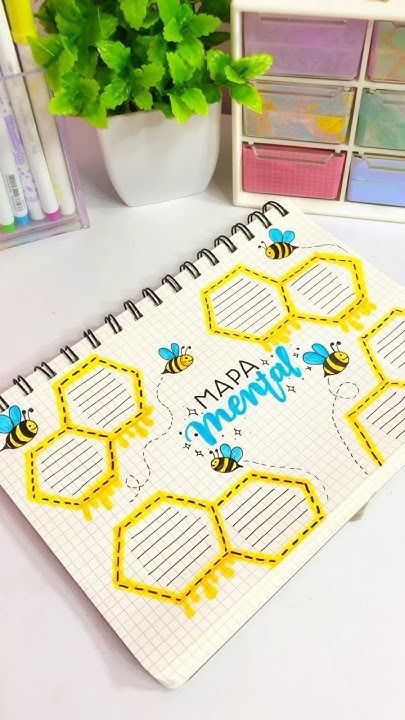
Whether you're a student, manager, or entrepreneur, the mapa mental is a potent tool for making sense of complex information, fostering creativity, and driving performance. So, why not start your next project or study session with a mapa mental and see the difference it makes?
Related Articles

"Comprehensive Mapa Conceitual da História da Contabilidade
Embarking on a journey through the annals of time, one encounters a fascinating tale of humanity's attempt to quantify and understand its activities - a...

Mapa Conceptual de Protección de Datos
Data protection is a critical aspect of today's digital landscape, and understanding its fundamentals can often feel like navigating a maze. A conceptual map...

Cómo Hacer un Mapa Conceptual en Word
¿Cómo crear un mapa conceptual en Word? Si estás buscando una forma efectiva de organizar y visualizar tus ideas, un mapa conceptual puede ser la solución...

Mental Map: Outsmarting Malicious Mathematics
The dreaded phrase "mapa mental de malditas matematicas" might strike terror into the hearts of those who grapple with numerical challenges. But what if we...

Mapa Conceptual del Microscopio
A microscope, a scientific instrument that magnifies minute objects, is an essential tool in various fields, from medicine to electronics. Understanding its...

Mapa Conceptual de laCelula: Entiende laEstructura en profondeur
The concept of a cell, the fundamental unit of life, has captivated scientists and scholars for centuries. Mapping this intricate microscopic world is...