Learn to Butcher a Cow: Step-by-Step Guide [Infographic]
The process of butchering a cow involves a series of steps that convert a whole carcass into various cuts of meat. This method, known as a "map," guides butchers and meat processors through the procedure, ensuring no part of the animal goes to waste. This guide will walk you through the map to butcher a cow, from start to finish.
Whether you're a seasoned butcher or a home enthusiast, understanding the cow's anatomy and the correct butchering techniques can significantly improve the quality and yield of your cuts. This guide will cover the basics and provide detailed instructions along with visual examples.
Safety and Preparation
Before beginning, ensure you have all the necessary tools, a clean workspace, and appropriate attire. This includes a sharp knife, saw, bandsaw, or power saw, a scaling machine (optional), and protective clothing. It's also crucial to follow food safety guidelines to prevent bacterial growth and cross-contamination.


First, chill the carcass to make the butchering process easier. This can be done by keeping the carcass at a temperature between 33°F to 38°F (0.5°C to 3.3°C) for several hours. Once chilled, rinse and clean the carcass before proceeding with the butchering process.
Stunning and Hanging the Carcass
Stunning the cow is the first step in preparing the carcass for butchering. This is typically done at a slaughterhouse using electrical stunning, which renders the cow unconscious. After bleeding, the carcass is skinned and the hide is removed.


The carcass is then hung from a rail using the Achilles tendon. This allows for proper drainage of blood and other fluids, as well as even distribution of weight during the chilling process. Once chilled, the carcass is ready for butchering.
Fabrication and Separation of Primal Cuts
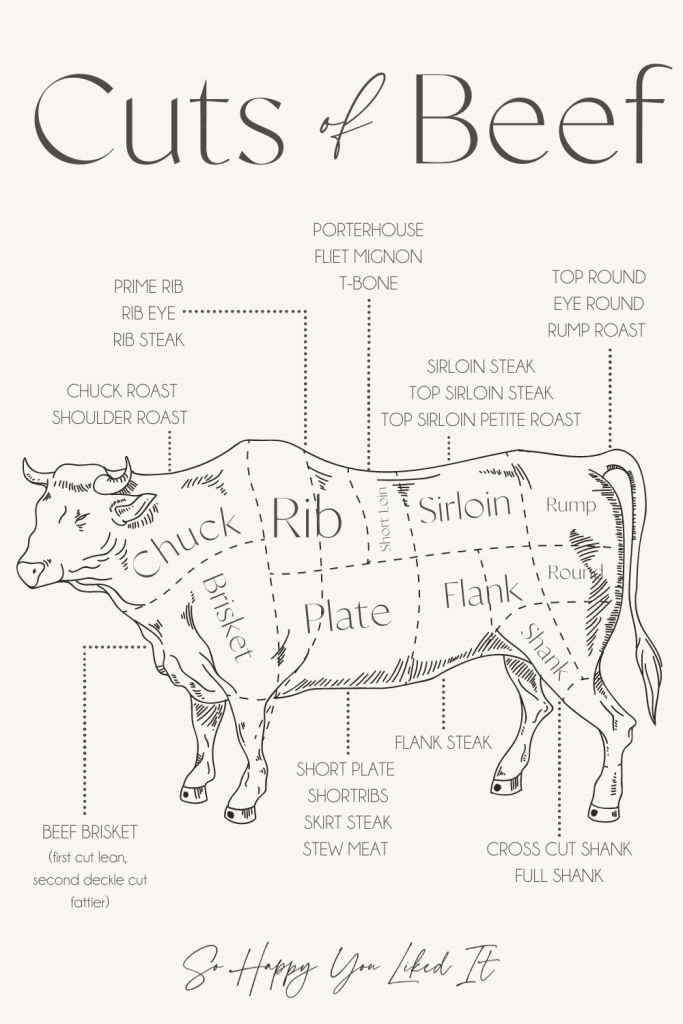
The primary objective of cow butchering is to separate the carcass into primal cuts, which are large sections of muscle and fat that can be further divided into subprimal cuts. These primal cuts serve as the basis for most meat cuts you'd find in retail stores or grocery markets.
The carcass is typically divided in half along the spine, with the foreshank, foreleg, and shoulder separated from the hindquarter. The three primal cuts in the forequarter are the chuck, rib, and loin, while the hindquarter contains the round, sirloin, and flank.


The Map: Dividing the Carcass
Now that we have the primal cuts separated, let's go through the step-by-step process of butchering each section to yield individual cuts of meat.
Remember, the key to efficient butchering lies in understanding the cow's anatomy and utilizing each part optimally. Every muscle, bone, and organ has a specific purpose and value, so it's essential to be aware of where each cut comes from and its associated yield, tenderness, and flavor.
Butchering the Forequarter
The forequarter consists of the chuck, rib, and loin primal cuts. Here's how to break down each section:


- Chuck: The chuck is a muscular section that includes the shoulder and upper arm. It's made up of 11 different muscles that yield various cuts like the shoulder clod, cross rib, and arm roasts. This section is known for its tougher meat and more connective tissue, making it ideal for slow-cooking methods.
- Rib: The rib section consists of 6-8 ribs and provides valuable cuts such as short ribs, back ribs, and ribeye steaks. The ribeye is a highly marbled muscle, resulting in tender, flavorful meat perfect for various cooking methods.
- Loin: The loin runs along the cow's back, from the rib section to the hip. It yields tender, lean cuts like T-bone and porterhouse steaks, as well as tenderloins. The spinalis dorsi muscle, located at the top of the T-bone, is often separated to create the delectable filet mignon.
Butchering the Hindquarter
The hindquarter consists of the round, sirloin, and flank primal cuts. Here's how to break down each section:
- Round: The round is the largest primal cut from the hind leg. It yields lean and economical cuts like top, bottom, and eye of round roasts, as well as rump steaks. The round is suitcase for slow-cooking methods and is best cooked using moist-heat techniques.
- Sirloin: The sirloin is a lean and flavorful primal cut that includes the short loin and part of the round. It offers tender cuts like sirloin steak, tri-tip, and flap meat, which can be marinated and grilled or used in stir-fries.
- Flank: The flank is a tough, thin section located along the cow's side. It's known for its striated appearance and liverλλα-like tenderness. Flank steak can be marinated and grilled or used in flanken-style cuts for slow cooking. The skirt steak, a thin, sheet-like muscle that runs along the side of the carcass, is also part of the flank and is popular for fajitas and stir-fries.
During the butchering process, it's essential to keep track of the various cuts and their origins. Proper labeling and organization will ensure that each piece is used in the appropriate dish, maximizing both flavor and tenderness.
Utilizing Trimmings and Offal
In addition to the primary cuts, the cow also provides various trimmings, offal, and byproducts that can be utilized in numerous ways. Here are a few examples:
- Grinding meat: Trimmed fat, silver skin, and other lean meat can be ground and used for burgers, meatballs, or meatloaf.
- Soup bones: Back, neck, and rib bones, along with sinew and cartilage, can be used to make flavorful stocks and soups.
- Offal: Organ meats like liver, heart, and kidney, as well as tongue and tripe, can be prepared using various cooking techniques and recipes.
Learning the map to butcher a cow takes time, practice, and patience. However, with each step, you'll gain a deeper understanding of the cow's anatomy and the importance of proper butchering techniques. By mastering these skills, you'll appreciate the value of each cut and be able to optimize your meat yield and quality.
Embark on this journey of discovery, and you'll not only enhance your butchering skills but also develop a newfound appreciation for the cow and the art of butchery.
Related Articles

"Learn to Draw Christopher Columbus: Step-by-Step guide"
Drawn with meticulous detail, Christopher Columbus, the renowned explorer, comes alive on paper, invoking curiosity about the historic figure and the Age of...

Cranial Nerve Face Drawing: Learn with Easy Step-by-Step Guide
Ever found yourself fascinated by the intricate network of nerves that connect our brains to the rest of our bodies? The human cranial nerve system is a marvel...

Learn to Draw Cute Zebra Cartoons: Step-by-Step Guide
Ever attempted to capture the distinctive black and white stripes of a zebra on paper? Drawing a cartoon zebra might seem like a simple task, but it involves...

Mexico Flag Drawing Tutorial: Easy Step-by-Step Guide
The Mexican flag, a symbol of national pride and history, is recognized worldwide for its vibrant colors and intricate design. The History Behind the Mexican...

Drawing Sugar Skulls: Step-by-Step Guide for Perfect Day of the Dead Art
How about adding a touch of sugar and spice to your art? Sugar skulls, or calaveras de azúcar, are iconic symbols of Día de los Muertos, a vibrant Mexican...

"Add Audio to Your GIFs: Easy Step-by-Step Guide"
Ever wanted to add audio to a GIF to make it more engaging, or simply to express what might not be visible? While GIFs are great for visual storytelling...