Watch: Mama Pigeon Nurtures Her Babies
In the bustling urban jungle, one of the most familiar sights is that of rock doves, more commonly known as pigeons, nesting in cozy crannies of our tall buildings. Among these birds, it's not unusual to spot a mama pigeon diligently feeding her young. This act of nurturing is not just a sight to behold but also an essential aspect of their survival strategy in the city environment.
Mama pigeons play a crucial role in the growth and development of their young ones. They provide nourishment, warmth, and protection, ensuring their squabs (baby pigeons) have the best possible chance at life in the challenging urban ecosystem.
The Pigeon Parenting Journey
The lifecycle of a pigeon in the city begins with the mating season, which typically lasts from February to July. During this period, pairs of pigeons select their nesting spots, often in ledges or niches high above the ground. Here, the female pigeon lays one to three white, unspotted eggs.
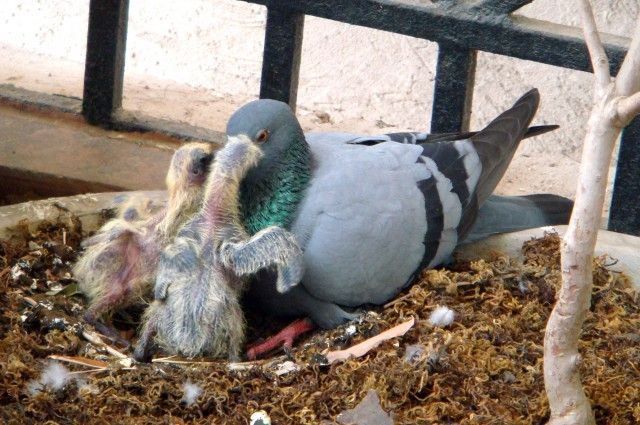


Incubation is a joint effort, with both parents taking turns to sit on the nest and keep the eggs warm. After about 18 days, the eggs hatch, and the squabs emerge, helpless and blurry-eyed, but ready to grow under the watchful care of their parents.
The First Few Weeks
Newborn squabs are virtually featherless and blind, relying entirely on their parents for food and safety. Mama pigeons, in particular, produce a special kind of "pigeon milk" - a nutritious, delayed-emptying food that's rich in proteins and antibodies, essential for the baby pigeons' growth and immune system development.


This unique milk is produced in the crop, a muscular pouch in the pigeon's esophagus. The mama pigeon regurgitates this milk into the squabs' beaks, providing them with the necessary nutrients for their rapid growth. Notably, the milk's composition changes over time, adapting to the squabs' evolving nutritional needs.
The Weaning Process
As the squabs grow, they start to develop their feathers and gain independence. Around 24 days of age, they begin to sample solid food, known as "mush," which their parents regurgitate. This mash, a mix of crops' contents and the pigeon's digestive enzymes, helps the youngsters transition to a full-fledged adult diet.
The weaning process gradually reduces the squabs' dependence on their parents' regurgitated food, allowing them to take in external food/water at around 28 to 35 days of age. However, the parents continue to care for and protect their young ones until they can fend for themselves, usually around 42 to 45 days.


The Role of Parenting in Urban Survival
In the urban environment, where resources are plentiful but also highly competed for, effective parenting strategies are vital for ensuring the survival of the next generation. Pigeons have evolved impressive strategies to cope with this challenge, including selective breeding, efficient nourishment, and protective care.
The rigorous feeding and care provided by mama pigeons directly influence the survival rates of squabs. In urban areas, squabs that receive parental care have a higher chance of survival than those that do not, highlighting the importance of the nurturing role played by parent pigeons.
Selective Breeding in Urban Environments
Urban environments present unique challenges and opportunities, driving the evolution of certain beneficial traits in pigeons. For instance, city pigeons tend to be more agile and adaptable than their rural counterparts. This enhanced adaptability, coupled with the nurturing care provided by parents, contributes significantly to the success of urban pigeon populations.


Moreover, the increased food availability in cities has influenced pigeons' breeding patterns. They tend to have more clutches and higher hatching success rates in urban areas, thanks to abundant resources and the protective nesting sites provided by buildings.
The Impact of Urban Parenting on Pigeon Populations
The rigorous nurturing provided by mama pigeons, along with the collaborative efforts from their partners, significantly impacts urban pigeon populations. The survival and reproduction rates of squabs in cities are higher than in rural areas, primarily due to the abundant resources and nest sites available in urban environments.
However, this increased productivity is not without its challenges. Overcrowding and competition for resources can negatively impact pigeon well-being. balcony & gutter cleaning services & pest control companies play a crucial role in managing urban pigeon populations, ensuring their impact remains balanced and harmonious with human coexistence.
In the grand tapestry of urban life, the sight of a mama pigeon feeding her young serves as a stark reminder of the resilience and adaptability of these birds. Their success in populating cities worldwide is a testament to their effectiveness as parents and their ability to exploit the unique opportunities presented by the urban environment. As we continue to coexist with these feathered city-dwellers, it is essential to appreciate and respect their vital role in our urban ecosystems.
Related Articles

When to Introduce Flash Cards to Babies
Introducing flashcards to a baby can be an exciting endeavor, but knowing the right time to begin can Maximize your little one's learning potential. As...

When Do Babies Start Walking: Average Age & Milestones
The timeline of a baby's development is fascinating, with milestones that parents eagerly anticipate. One of the most captivating and cherished moments is when...

When Can Babies Start Talking: A Milestone Timeline
Miracles begin early in a child's development, and one of the most captivating milestones is the onset of language and speech. Many parents wonder, "When can a...

Cuddly Mama & Baby Seal Coloring Pages
Dive into the adorable world of marine life with Mama and Baby Seal Coloring Pages! These delightful printables are not only fun and engaging for kids but also...

Why Your Baby Needs Security Objects
Babies, as precious and vulnerable, require a safe and secure environment to grow and thrive. Here, we explore the reasoning behind various security objects...

Finding the Best Bottle for Breastfed Babies
Selecting the perfect bottle for your breastfed baby can seem daunting, but understanding their needs and knowing the right tools can make feeding time a...