Light Black Hex Code: #000000 in RGB & HSL
Ever found yourself in a creative rut, struggling to find the perfect hue for your project? You're not alone. One shade that's been gaining traction in the design world is light black, a fascinating blend of lacking color and overwhelming darkness. Represented by the hex code #2F4F4F, it's a color that's as intriguing as it is versatile.
Light black is an unassuming yet captivating color. It's often used as a text color or background shade, providing stark contrast and a touch of elegance. But why should you consider it for your next project? Let's delve into the world of light black and explore its applications, color theory, and even how to convert other colors to its unique shade.
Understanding Light Black
At first glance, light black might seem like a contradiction. Isn't black synonymous with darkness and absence of color? Yes, but in the context of design, light black is a variant that's sufficiently light enough to be used as a background color or in text, making it remarkably useful in a variety of settings.


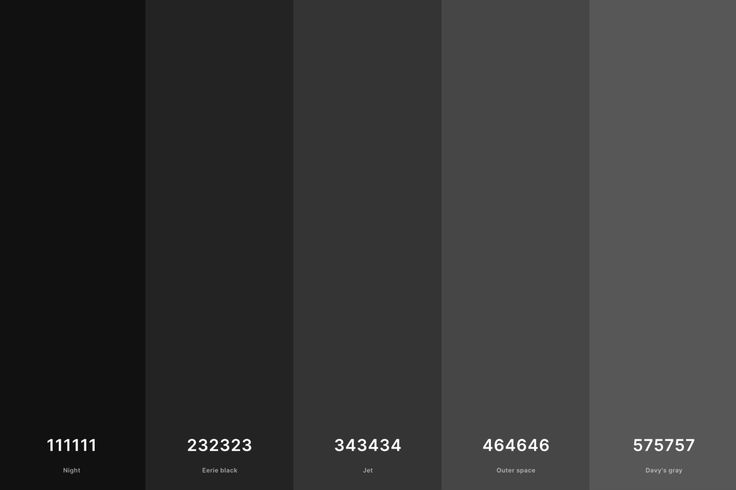
With a hex code of #2F4F4F, light black is created by mixing the primary colors blue and green, with a hint of black. This results in a color that's cool to the eye, with a refreshing blend of both warm and cool tones. Its lightness value (L) in the HSL color space is 40%, making it dark yet usable in various design contexts.
Color Theory: Light Black and Its Role
In color theory, light black plays an essential role as a neutral color. As a near-black, it complements a wide range of colors, from vibrant hues to other neutral shades. Its grayish hue makes it particularly useful in professional and clean designs, where a touch of sophistication is required.


Light black's cool undertones make it an excellent match for both cool and warm colors. It creates high contrast with light colors, making it an ideal choice for headings or important text. Conversely, it can blend seamlessly with dark colors, providing visual harmony in complex designs.
Light Black in Web Design
In web design, light black (#2F4F4F) is often used for its versatility. It's a great choice for backgrounds, especially in situations where a completely black background might be too intense. It's also frequently used for text, providing excellent contrast against light or white backgrounds.
For a striking visual impact, consider pairing light black with bright colors like cyan (#00FFFF), neon green (#39FF14), or neon pink (#FF69B4). Alternatively, combine it with other neutral shades like light gray (#D3D3D3) or off-white (#F5F5DC) for a more subtle, professional look.


Exploring Alternatives and Variations
Light black isn't the only member of its unique color family. By adjusting the RGB values, you can create different shades of near-black, each with its own character and uses. Let's explore a couple of these alternatives.
For a slightly darker shade, consider light black's neighbor, dark gray (#A9A9A9). With an HSL lightness value of 30%, it's a step darker than light black, providing a different contrast and tone. On the opposite end, light gray (#D3D3D3) with an HSL lightness value of 66% offers a lighter shade, useful for backgrounds and text when used sparingly.
Converting Colors to Light Black
You might be wondering how to create light black from other colors. Converting existing colors to light black involves adjusting their RGB values. For RGB colors, light black is represented as (47, 79, 79). This is achieved by keeping the blue and green values equal, then adding a touch of black (i.e., the red value).


For HSL values, light black is (197°, 37%, 40%). In the HSL color space, light black is created by keeping the saturation and lightness values constant, then adjusting the hue to produce a grayish color. This provides a simple way to create light black from any color by keeping the saturation and lightness values constant and adjusting the hue.
Understanding and mastering light black, and its various shades, can significantly enrich your design toolkit. It's a versatile color that, despite its simplicity, brings a unique touch to any project. So, the next time you're grappling with a creative block, give light black a try. You might just discover a new favorite color.
Related Articles

Jet Black Hex Code: #000000 - Ultimate Black Shade
The term "jet black hex code" might seem like a curious blend of the tangible and digital worlds, but it's a fascinating intersection worth exploring. In the...

Pure Black Hex Code: #000000
The enigmatic allure of pure black in the digital world is not defined by the absence of color, but by the presence of endless possibilities. When it comes to...

Light Tan Hex Code: #D2B48C
Have you ever found yourself struggling to articulate an exact shade of tan in a design project or document? Harmonizing hues in visual layouts can be a tricky...

Light Blue Grey Code
In the vast spectrum of web development, the term "light grey blue code" doesn't exactly roll off the tongue, yet it's a concept that's gaining traction in the...

Light Grey Tone Hex Code
The subtle art of color selection in web design is often understated, yet it greatly impacts user experience and overall aesthetics. One such colors that has...

Light Purple Hex Code: Find Perfect Shade
Ever found yourself searching for the perfect shade of purple for your website or graphic design project, only to be overwhelmed by the countless hues and...