"Vibrant Jellyfish Drawing: Colored Picture Inspiration"
Jellyfish drawings are a captivating way to explore the boundless realms of underwater life and artistic expression. These gelatinous creatures, with their ethereal forms and vibrant colors, have inspired artists across the globe to pick up their pens, pencils, and digital tools to capture their ephemeral beauty on paper or screen. Let's delve into the artistry behind creating these enchanting colored pictures of jellyfish.
Jellyfish drawings span a wide range of artistic styles and mediums. From hyper-realistic pencil sketches to abstract digital art, the versatility of these creatures as subject matter is astounding. As with any drawing, creating captivating jellyfish art requires a keen eye for detail, a strong understanding of color, form, and composition, and a whole lot of creativity.
The Anatomy of a Jellyfish: A Drawing Perspective
Before diving into the artistic process, understanding the basic anatomy of a jellyfish is crucial. These creatures are composed of several distinct parts: the bell (or umbrella), oral arms, and trailing tentacles. The bell houses vital organs and serves as the marine animal's primary means of locomotion, while the oral arms and trailing tentacles are responsible for catching prey and defense respectively.


To create detailed and accurate jellyfish drawings, artists must master portraying these different structures and their relationships to one another. Observation, study, and reference materials are invaluable resources for capturing the intricate beauty of these creatures.
Drawing the Jellyfish Bell
The bell is the most prominent feature of a jellyfish and serves as the foundation for your drawing. Its rounded, dome shape resembles an upside-down bowl with a flat base. To create a visually compelling bell, focus on capturing its smooth, convex surface and the interplay between light and shadow. Using cross-hatching and subtle shading can help bring depth and dimension to your drawing.

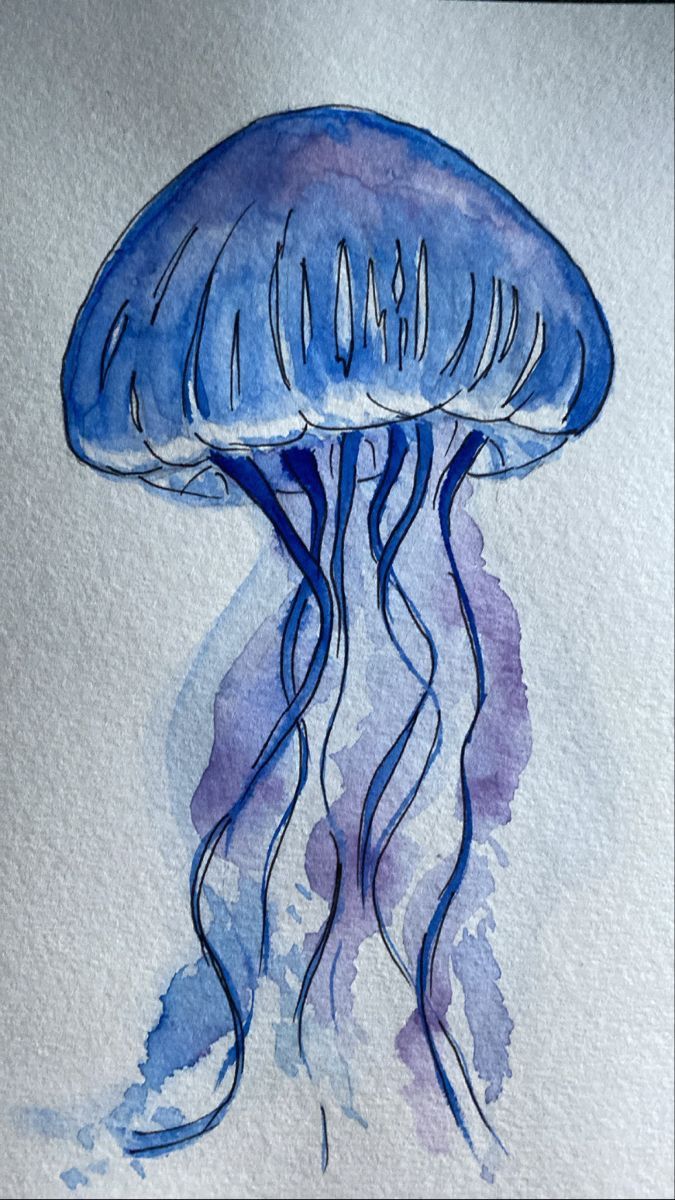

Color plays a significant role in enhancing the bell's appearance. Jellyfish come in a myriad of colors, from translucent whites and pale blues to brilliant purples and reds. Experiment with different shades and tints to bring your subject to life. Consider how light might diffract through the bell's semi-transparent edges, casting mesmerizing colors on its surface.
Illustrating Oral Arms and Tentacles
Jellyfish oral arms and trailing tentacles can be challenging to draw due to their delicate, flowing forms. These structures often extend beyond the bell, wriggling and swaying in the ocean currents. To capture their movement and grace, practice drawing curved lines and conflicting shapes, using exaggerated gestures to emphasize motion.
Consider thearrangement and number of oral arms and tentacles in your drawing. Some species have scores of these delicate appendages, while others have only a few. Varying their length, thickness, and curl can create a dynamic, energetic composition. Additionally, experiment with shading to showcase the stark contrast between the light, feathery oral arms and the thicker, more robust trailing tentacles.


Mastering Color in Jellyfish Art
Color is a crucial element in jellyfish drawings, as these creatures are renowned for their strikingly vibrant hues. To create captivating colored pictures of jellyfish, familiarize yourself with color theory and explore various color schemes. Complementary, split-complementary, and triadic schemes all work well for jellyfish art, as they create harmonious, eye-catching combinations.
Remember that color doesn't just exist on the surface of your subject – it's influenced by light, shadow, and transparency. As sunlight filters through the water, it can cast warm, inviting tones on your jellyfish's upper surface while cool shadows engulf its underside. By experimenting with both additive and subtractive colors, you can create a more believable underwater environment.
Digital Coloring Techniques
Digital artists have access to a vast array of tools and techniques for coloring their jellyfish drawings. Layer blending modes, gradient maps, and color dodge/burn can help create striking transitions between hues and enhance the overall visual impact of your artwork. Soft paintbrushes and smudge tools can simulate the veiny, ethereal quality of a jellyfish's translucent flesh, while hard-edged brushes can define its edges and texture.


Don't be afraid to take advantage of digital art's versatility – experiment with textured brushes, patterns, and filters to add interest and depth to your colored pictures of jellyfish. Utilize the layer palette to isolate and adjust individual elements, such as the bell, oral arms, and tentacles, ensuring they all harmonize together.
Traditional Coloring Methods
Artists working with traditional media have countless options for coloring their jellyfish drawings. Prismacolor markers, Copic pens, and alcohol-based markers like Winsor & Newton's ProMarkers are popular choices for laying down vibrant colors and smooth, seamless blends. Watercolor paints can be used to create soft, ethereal washes that capture the dreamlike quality of these creatures, while colored pencils and pastels allow for controlled, precise application of hue.
Combine various traditional materials to create mixed-media jellyfish artworks. For instance, start with a watercolor underpainting to establish the composition and basic colors, then add details and depth with colored pencil, pastel, or marker. Experiment with different paper textures and surfaces to produce unique, engaging colored pictures of jellyfish.
Whether you favor digital or traditional mediums, creating captivating jellyfish drawings demands patience, practice, and a passion for underwater life. Embrace the challenge, and you too can craft enchanting colored pictures of these mesmerizing creatures. Now grab your pens, pencils, or digital brushes, and let the artistic journey begin!
Related Articles
Vibrant Jellyfish Drawing: Colored Picture
Jellyfish, these graceful, ethereal creatures of the sea, have captivated human imagination for centuries. Their mesmerizing dance in the ocean depths has been...

Magnificent Jellyfish Colored Images
Jellyfish, often trespassing the boundaries of categorization, are neither plants, nor animals, making them a fascinating subject among marine enthusiasts...

Colored Turkey Images
Turkeys, often associated with the Thanksgiving feast, come in a varieties beyond just the familiar white or heritage breeds. Colored turkeys, with their...

Vibrant Colored Portada Designs Dominate
Immerse yourself in the vibrant world of portada de colores , a captivating truck and trailer wrap design trend that's taking the roads by storm. Beyond just...

Mastering Park Scenery: Step-by-Step Picture Drawing Guide
Picture a serene park scene: kids laughing on the swings, leaves dancing in the breeze, a gentle sun-kissed sky. Now, capture this idyllic moment with a park...

Master the Art: Box Jellyfish Drawing Tutorial
Dipping into the captivating realm of marine biology and artistic expression, one might stumble upon the fascinating topic of box jellyfish-inspired drawing...