Halloween Candy Experiments: Spooky & Sweet Science
Nothing quite sparks the spirit of Halloween like the tantalizing aroma of candy wafting through the air. As the leaves change color and the pumpkins start to glow, many of us are lured in by the sweet, seasonal escape of Halloween candy. But have you ever wondered what happens when you mix your favorite treats? Halloween candy experiments present an array of science-fair-worthy fun, mashing up delicious delights for curious effects. Let's dive into the fascinating world of Halloween candy chemistry, where tooth decay has never been so intriguing.
A popular experiment involves placing different types of candy inside a jar with a small amount of water. After a few weeks, fascinating discoveries emerge. Hard candies like Smarties and Sweethearts dissolve into a sugary syrup, while gummy candies like Sour Patch Kids and Skittles transform into a disintegrated mess at the bottom of the jar. Chocolate candies, like Reese's Pieces and M&M's, fare the best, retaining their shape but morphing into an unappetizing slime. Why the dramatic changes? Different candies have varying chemical compositions, which interact uniquely with water, leading to these mesmerizing results.
Exploring Candy Dissolution
At the heart of these experiments lies the process of dissolution, which occurs when a solid substance, like candy, mixes and combines with a liquid, such as water. The key factors influencing dissolution are the atractiveness and particle size of the solid, the temperature of the liquid, and the surface area of the solid exposed to the liquid.


The frantic melting and dissolving of Halloween candy is influenced by these factors, with sugar playing a starring role. Sugar molecules love to attract water molecules, a process known as hydrogen bonding. In the case of hard candies, the high sugar content and small particle size encourage rapid dissolution.
Dissolution vs microstructure
The structure of candy also dictates its dissolution rate. Gummy candies, for instance, contain gelatin, a protein that binds ingredients together. When placed in water, gelatin weakens over time, causing the candy's microstructure to collapse, leading to the grimy remains at the jar's bottom.


Chocolate, on the other hand, has a complex microstructure featuring fat droplets and sugar crystals within a continuous cocoa solids network. When exposed to water, the sugar and fat leach out first, leaving behind a cocoa/carbohydrate matrix that gradually breaks down, explaining the slimy residue.
The "Sugar Skull" Experiment
A lesser-known experiment involves creating a "sugar skull" using granulated sugar and water. By pacifying the sugar particles to form a solid mass, this activity demonstrates the process of reversibly dissolving sugar crystals. To create the skulls, simply add water to granulated sugar, knead the mixture until it holds together, carve out your design, and let it dry. The results are eerily beautiful and perfectly on-theme for the holiday.
Additionally, cooking implements like wax paper or candy thermometers can be used to create sugar crystal patterns. By heating sugar and water together, and then carefully controlling their cooling, intricate crystal formations emerge, yielding stunning results that echo the ornaments adorning Día de los Muertos altars.


The Science of Candy Melting
Melting candy is another captivating Halloween experiment, with the melting process dictating the final result. Many Halloween candies, like chocolate and caramel, contain fats that melt at specific temperatures, transforming the solid into a liquid state.
Chocolate, for example, contains cocoa butter, a fat that melts within a specific temperature range. To ensure chocolate doesn't overheat and seize (form a thick,non-dispersible mass), careful temperature control is essential. Using a double boiler or microwave at 50% power can help maintain the ideal temperature between 110°F to 120°F (43°C to 49°C). Once melted, chocolate can be combined with other ingredients, such as Circus Peanuts or Toblerone, to create unique, Willy Wonka-inspired concoctions.
Caramelization
Caramel, another popular candy ingredient, undergoes a process called caramelization when heated. As the sugars in caramel break down, they turn brown and develop a rich, complex flavor. The key to successful caramelization lies in monitoring the temperature closely, typically between 320°F to 338°F (160°C to 170°C). Applying heat too aggressively can cause the caramel to burn, creating bitter, unpleasant flavors.


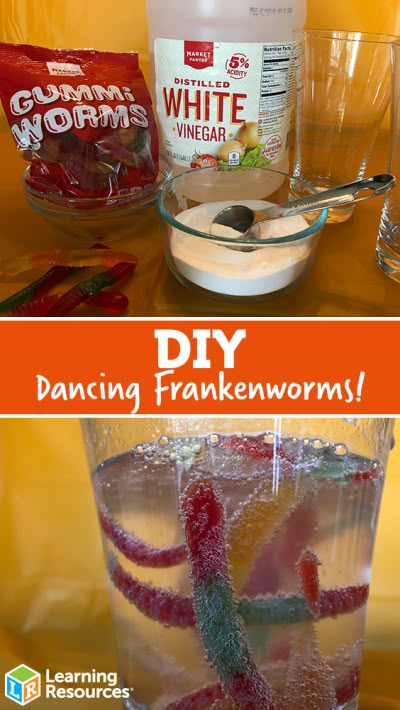


Creating Candy from Sugar
On the other hand, making candy from scratch involves the process of crystallization, where sugar particles join together to form larger, uniform crystals. To create your own candy, start by carefully heating sugar and water until the sugar dissolves, then allow the mixture to cool. As it cools, sugar molecules bond together, eventually producing crystals. By carefully managing the cooling process, you can create delicious candy varieties, like rock candy or lollipops.
From dissolution to melting, Halloween candy experiments offer a sweet escape into the world of chemistry. Whether you're dissolving, melting, or creating candy, these hands-on activities not only satisfy your child's sweet tooth but also nourish their curious mind. So, as the chilly autumn air brings Halloween nightsthis year, grab some candy and let the experimental fun begin!
Related Articles

"Sweet Science: Candy Lab Experiments for Kids"
If you're a science enthusiast seeking fun, interactive ways to engage with chemistry and physics, why not explore the captivating world of candy science...

5th Grade Science Fair Projects: Sweet Candy Experiments
Science fairs are not merely academic exercises but fun learning opportunities for kids to explore their curiosity. As a 5th grader, the world is full of...

Candy Corn Cut Outs: Sweet Halloween Ideas
Have you ever found yourself reaching for a classic Halloween treat, only to be struck with an idea for creative candy corn cut outs? These iconic tri-colored...

Kids' Candy Pumpkin Games: Fun & Sweet Halloween Activities
Ah, the sweet combination of childhood fun and Halloween treats! Have you ever thought about combining the love for games and the joy of candy pumpkins? You're...

Halloween Tree PNG: Spooky Graphic for Your Home or Project
Have you ever considered adorning your digital space with a Halloween-themed tree? A Halloween tree PNG could be just the thrilling addition you need to...

Print Your Own Candy Hearts: Sweet Personalization at Home
Tired of store-bought candy hearts that don't quite say what you mean? Why not print your own? Personalized, unique, and fun to create, printable candy hearts...