Gummy Worm Halloween Science Experiment
Creative educators, scientists, and parents are always looking for engaging, safe, and fun ways to teach children complex concepts. One age-old favorite that continues to pique curiosity and inspire learning is the classic gummy worm Halloween experiment. This hands-on, experiential learning approach not only makes science accessible to kids but also fostering a lifelong love for it.
So, what exactly is the gummy worm Halloween experiment? In a nutshell, this fun science project involves the observation of the osmotic process using gummy worms as a visual aid. Kids get to witness firsthand the movement of water molecules through a semi-permeable membrane, a key concept in understanding cellular structures and biological processes.
Setting Up the Gummy Worm Halloween Experiment
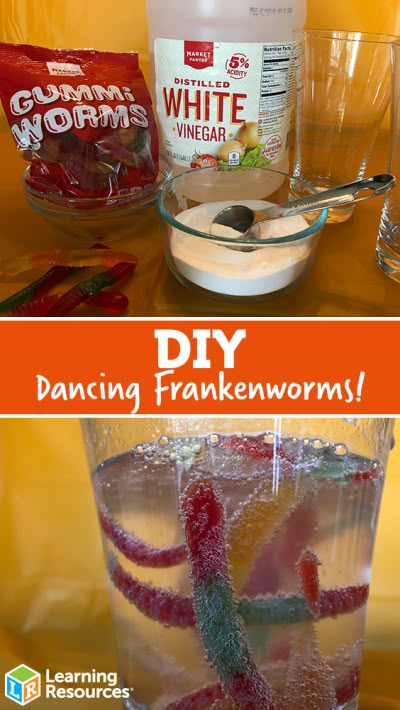
The setup for this experiment is deceptively simple, which is one of its main attractions. All you need are some vinyl or gelatin-based gummy worms, a clear glass or beaker, water, and a sugary substance like sugar or corn syrup.


To kickstart the experiment, first, place your gummy worms in a bowl of water. The clear liquid allows kids to see the osmosis process in action. Then, carefully transfer the gummy worms into a glass or beaker filled with the sugary solution.
Observing the Osmosis Process
Osmosis is the movement of water molecules from an area of low solute concentration (high water concentration), through a semipermeable membrane, to an area of high solute concentration (low water concentration). In the gummy worm Halloween experiment, the gummy worms act as the semipermeable membrane.


The sugary solution works as the high solute concentration area, while the water acts as the low solute concentration area. As the experiment progresses, kids can observe the gummy worms shrinking as water moves from the water molecules into the gummy worms due to osmosis.
Figuring Out the Osmotic Pressure
As water molecules move into the gummy worms, they also carry the sugar molecules along. This creates a higher sugar concentration inside the gummy worms, leading to a second round of osmosis where water moves back out of the gummy worms. This back-and-forth movement continues until equilibrium is reached.
The gummy worms' size change can also help kids understand osmotic pressure, which is the pressure exerted by the solvent in an osmotic process. In this case, the water pressure inside the gummy worms increases as more water molecules move in, making the gummy worms expand.




The Science Behind the Gummy Worm Halloween Experiment
The gummy worm Halloween experiment is aೊಡual illustration of passive transport in biological systems. In living organisms, cells use osmosis to transport water and other substances across their cell membranes. The process helps maintain the balance of solutes and water molecules in and out of cells, a critical function for cell survival and growth.
The experiment also demonstrates diffusion, another type of passive transport. Diffusion is the net movement of particles from a region of high concentration to a region of low concentration. In the gummy worm experiment, sugar molecules diffuse from the sugary solution to the water as water molecules diffuse into the gummy worms.
Osmosis vs. Diffusion: Differences and Similarities
Osmosis and diffusion might seem similar, but they differ in the type of substances that move and the mechanism involved. Osmosis is a type of diffusion, but it specifically involves the movement of water molecules through a semi-permeable membrane. Diffusion, on the other hand, can involve any type of molecule moving from a high concentration area to a low concentration area, not just water.


The gummy worm Halloween experiment is an ideal way to illustrate both processes, as kids can observe the simultaneous movement of water molecules (osmosis) and sugar molecules (diffusion) through a semi-permeable membrane.
Applying the Lessons Learned to Real-life Applications
The principles of osmosis and diffusion are crucial in many aspects of life and technology. They play a significant role in problems like dehydration, overhydration, and plant water management. Understanding these concepts also helps in creating more effective skincare products, food preservation techniques, and even desalination technologies.
Moreover, the gummy worm Halloween experiment encourages kids to think critically, develop observational skills, and understand the scientific method. It demonstrates that science is not just about theories and equations but also about experimenting, exploring, and discovering in a fun and engaging way.
So this Halloween, consider adding the gummy worm experiment to your list of activities. Not only is it a fun treat for kids, but it also introduces them to the fascinating world of science and helps them understand complex biological processes in a simple and relatable way. Who knows, you might even inspire the next generation of scientists!
Related Articles

Growing Gummy Bear Experiment: A Hands-on Edible Science Project
Ever wondered if you could turn your childhood favorite, the ever-elastic gummy bear, into a thriving miniature garden? Believe it or not, growing edibles in...

Gummy Bear Science Experiment
If you're a parent, teacher, or science enthusiast, you've probably encountered the ubiquitous gummy bear in classroom experiments. Yes, those squishy, sweet...

Growing Gummy Bear: The Science Experiment
Looking for a fun and educational science experiment for kids? Why not grow your own gummy bears? This hands-on activity is not only engaging but also teaches...

"Fun Apple Science Experiments for Kids"
The phrase "An apple a day keeps the doctor away" might be familiar, but did you know that apples are also a gateway to scientific exploration and learning?...

Skittles Rainbow Experiment: Creating Colorful Science Fun
Have you ever wondered what happens when you squirt multicolored Skittles into water? This fascinating experiment, dubbed the "Skittles Rainbow Experiment,"...
Gummy Worms: Spooky Halloween Snacks
From trick-or-treating to haunted houses, Halloween is a time when people of all ages indulge in spooky fun and sweet treats. Among the countless Halloween...