Greek Girl Names: Unique & Divine Ideas
The charm of Greek names for girls lies in their rich history, captivating mythological tales, and timeless elegance. These names, steeped in ancient culture and profound meanings, continue to be popular choices among modern parents seeking a unique and meaningful moniker for their daughters.
Greek mythology, with its dynamic goddesses and resilient heroines, has gifted us an extensive list of exquisite names that brim with story and strength. From warriors like Athena and Artemis to goddesses like Aphrodite and Hera, these names echo tales of courage, beauty, and power.
Popular Greek Names for Girls
Certain Greek names for girls have enjoyed enduring popularity, transcending time and cultural boundaries.
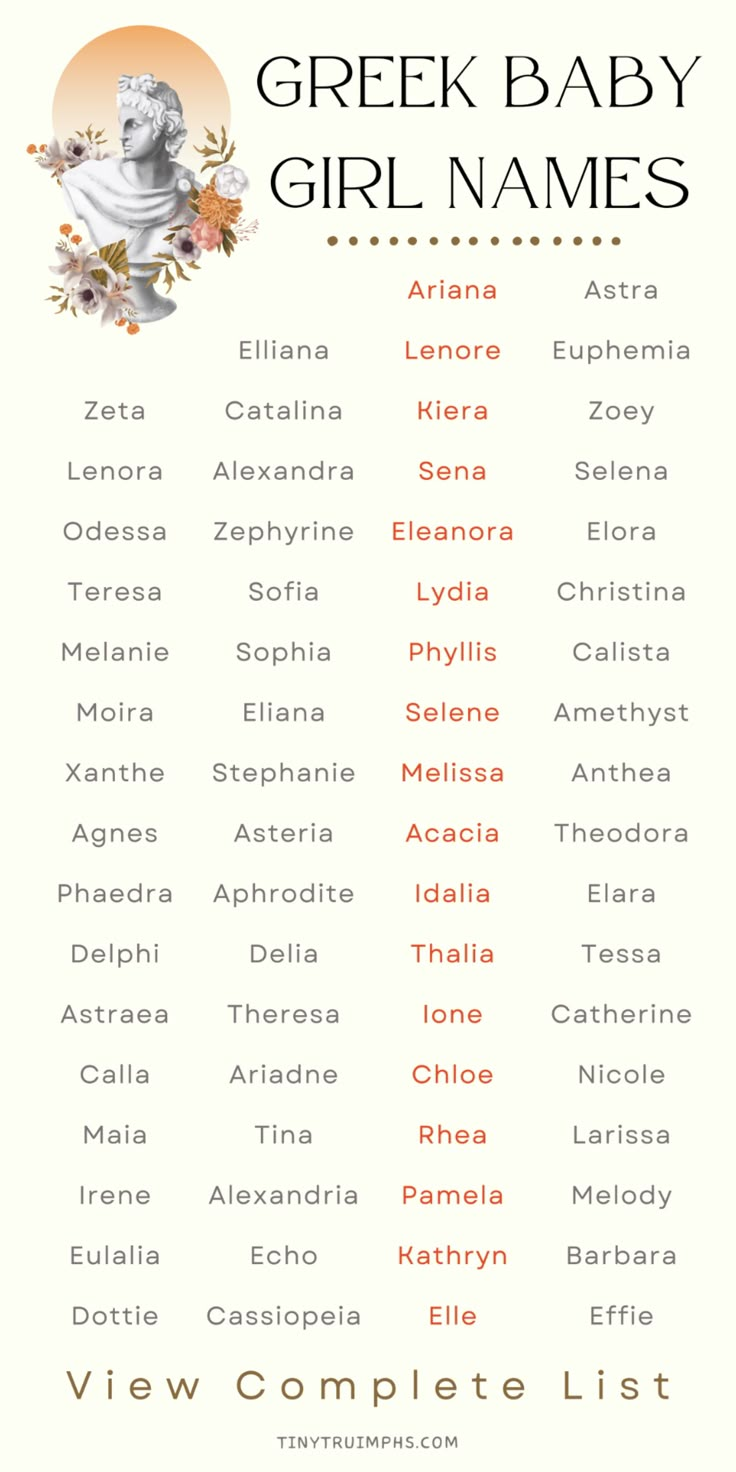


One such stalwart is Sophia, the Greek form of the Hebrew name Sapphira. Deriving from the Greek word 'sophia', it means 'wisdom'. Sophia has been a top 10 name in the U.S. since the 1980s, popularized by celebrities like Sophia Loren and Sophia Coppola.
Classic Choices
Other classic Greek names include Elena (variant of Helen, meaning 'torch, light'), Evelyn (from Euelpis, meaning 'good hope'), and Olivia (from Olive, meaning 'olive tree'). These names combine familiarity with a touch of ancient charm.


However, if you're seeking a less common Greek name, consider Lysistrata (leader of a women's movement in Aristophanes' play), Cerise (from Ceris, meaning 'cherry'), or Chimera (a mythical creature, symbolizing hope and impossibility).
Modern Twists on Classic Names
Some parents prefer to update classic Greek names with modern spellings or alternate forms. For instance, Zoey is an update of Zoe, the Greek name meaning 'life', while Cassandra, the Greek name meaning 'prophet', has been truncated to Cassie.
Newer Greek-inspired names like Aurora (from the dawn, meaning 'sunrise'), Nova (meaning 'new'), and Zephyrine (from Zephyr, meaning 'west wind') add a twist of modernity to their ancient roots.


Meanings and Symbolism in Greek Names
Greek names often carry profound meanings and symbolism, reflecting attributes, virtues, or natural elements. Understanding these meanings can help parents find a name that resonates personally.
For instance, Thalia (meaning 'blooming'), Melpomene (one of the nine Muses, governing tragedy, meaning 'to celebrate with song'), and Clio (the Muse of history, meaning 'to make famous') offer intricate symbolism that touches on areas like creativity, celebration, and remembrance.
Names from Greek Mythology
Choosing a name from Greek mythology can be an engaging way to embrace history and storytelling. Names like Atalanta (a huntress, meaning 'equal in weight'), Cassiopeia (a queen, meaning 'she whose word is excellent'), and Daphne (a naiad, meaning 'laurel tree') not only sound appealing but also tell a story.


Yet, these names are not without controversy, as they may remind some of tragic tales. For example, Daphne's naiad form allowed her to transform into a tree to escape Apollo, while Atalanta was turned into a lion by the goddess Artemis.
From the classic and familiar to the unique and historical, Greek names for girls offer a captivating journey through ancient culture and lore. Each name tells a story, carries a meaning, and whispers echoes of the past. As you explore this rich tapestry of monikers, consider not just their sound but also the story they tell – for it may prove a fascinating tale to share with your daughter one day.
Related Articles

AT&T Baby Girl Names: Unique & Innovative Ideas
Are you on the hunt for a unique and captivating girl's name that starts with the letter 'A'? You're in luck, as 'At and T' offers a compelling pick: Ada. This...

Unique and Divine: Popular Indian Girl Names for 2023 - SEO-Friendly
Welcome to a comprehensive exploration of the vibrant world of Indian girl names. India, a land rich in diversity and culture, boasts a fascinating tapestry of...

Hindu Baby Names: Unique ideas for your little princess
Exploring the rich tapestry of Hindu culture, one finds a wealth of unique and meaningful names for baby girls. These names, steeped in tradition and spiritual...

20 Unique & Clever Discord Server Name Ideas: Boost Engagement
In the dynamic world of Discord, server names are more than just labels; they're your community's digital identity. A compelling server name not only...

500+ Unique Girl L Names: Popular & Rare Ideas
Discovering the perfect name for a baby girl is an exciting journey filled with emotion and contemplation. With a rich tapestry of choices derived from various...

Punjabi Boy Names: Popular and Unique Ideas
Discover the charm of Punjab through its vibrant and rich culture reflected in its boys' names. These names, deeply rooted in history, literature, and...