Charcoal Color Code: #2F4F4F - The Ultimate Guide
The world of color is vast and diverse, with infinite shades waiting to be discovered. One such captivating color is charcoal, a deep, dark gray that evokes images of pristine black and white photos, artist's pencils, and smoldering campfires. In the digital realm, this color is represented by a unique set of numbers known as a hex code. Let's delve into the intriguing world of charcoal color hex.
Hex codes provide a standardized way to describe colors using a numerical system. The hex code for charcoal is '#2F4F4F', a combination of two digits each for red (2F), green (4F), and blue (4F). But what does this code mean, and how does it translate into the rich, smoky hue we associate with charcoal?
The Making of Charcoal Color
Charcoal color is a result of subtracting colors rather than adding them. In the RGB spectrum, where colors are created by combining red, green, and blue, charcoal is achieved by reducing the amount of all three colors. Each digit in the '2F' and '4F' of our charcoal color hex represents the intensity of each color channel on a scale from 00 (no color) to FF (maximum color).


In this case, '2F' is 44 in decimal, while '4F' is 79, indicating a higher intensity of green and blue compared to red, giving charcoal its slightly greenish undertone.
Charcoal in Design
Charcoal has a timeless appeal in design, often used to create a sense of sophistication, elegance, and balance. It pairs beautifully with both cool and warm colors, making it incredibly versatile. In web design, the charcoal color hex '#2F4F4F' is used to create dark, moody interfaces that subtly convey a sense of maturity and professionalism.


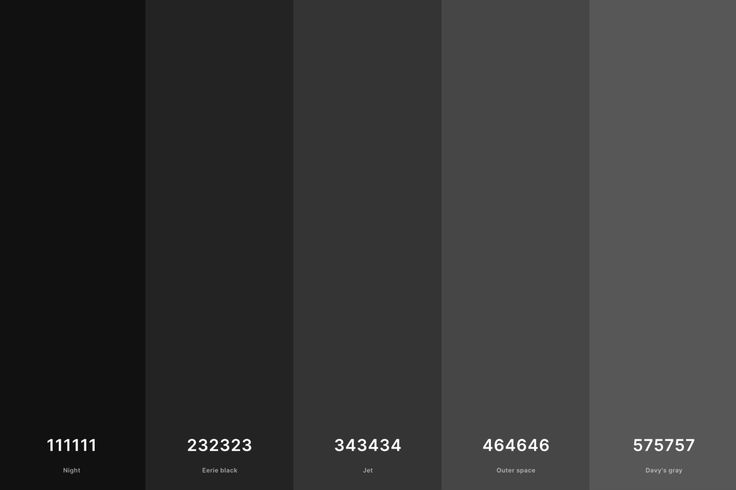
For instance,ANEXTA Inc, an NYC-based design studio, uses a deep, almost-black shade of charcoal (#1b1b1b) in their website design. This color choice, coupled with white typography, creates a stark contrast that draws attention to their projects and content.
When to Use Charcoal Color
Charcoal isn't just for digital design; it's widely used in print, fashion, and interior design. Its neutrality makes it an excellent background color, allowing other colors to stand out. It's often used in luxury brands' logos and packaging, like those of Chanel, Rolex, and Prada, to convey exclusivity and high-end quality.
In home decor, charcoal adds depth and warmth, especially in spaces with plenty of natural light. It pairs well with neutral tones like white, beige, and gray, but it also pops against bolder hues like navy blue, emerald green, and mustard yellow.




The Evolution of Charcoal Color
Charcoal as a color dates back to the late 19th century, taking its name from the powdery residue of burned wood used by artists since ancient times. The first recorded use of 'charcoal' as a color term was in 1892. However, it wasn't until the advent of digital design that the charcoal color hex became prevalent.
As design software evolved, so did our ability to quantify and standardize colors. The first widely adopted computer color standard, known as sRGB, was released in 1996. This led to the creation of the web-safe color palette, which included our now-familiar hex code system.
Hex vs RGB: A Brief Comparison
Both hex and RGB represent colors numerically, but they do so in different ways. RGB is an additive color model, meaning it combines different colors of light to create new ones. Hex, on the other hand, is a form of shorthand for RGB, using six characters to simplify color representation.


For instance, #00FF00 in hex is equivalent to RGB (0, 255, 0), which represents pure green. Although RGB is more versatile, hex codes are easier to read and remember, making them the preferred choice in web design.
In the ever-evolving world of color, charcoal stands as a testament to the eternal appeal of simplicity and sophistication. Whether you're a designer, an artist, or a homeowner looking to update your space, understanding the charcoal color hex can open up a world of creative possibilities.
So, the next time you reach for that shade of dark, smoky gray, remember, you're holding a digital ticket to a color that's stood the test of time. Now, go forth and design something stunning with your newfound knowledge of charcoal color hex!
Related Articles

Aqua Hex Code: Ultimate Color Guide
The unassuming hex code, #0066CC, is far from ordinary in the digital world. It's the Aqua hex code, a vibrant color that transcends its monochromatic...
Charcoal Black Color Code: #2F4F4F
Embarking on a journey into the inky depths of color, we encounter one of the most intriguing and profound shades: charcoal black. This myssterious hue, often...

Charcoal Grey Hex Code: The Ultimate Guide
In the vast spectrum of colors, there's a shade that consistently captures attention and exudes sophistication - Charcoal Grey. This hex color, often...

Salmon Hex Code: Color Guide & Uses in Design
Discovering the perfect shade for your web design can be a daunting task, especially when you're aiming for a specific color like salmon. Enter the world of...

Shades of Pink: Coding Color Guide
Picture this: you're walking down the paint aisle at your local hardware store. You've got that blank canvas at home just waiting for a pop of color, and...
Charcoal Gray Color Code Number
In the vast spectrum of colors, one shade stands out for its elegance and versatility - charcoal gray. This neutral hue, often represented by the hex color...