Black Hex Code 80%
Ever found yourself in a creative rut, searching for the perfect shade of black for your web design? You're not alone. The dilemma often lies in understanding the nuances between different shades of black hex codes, and where exactly the distinction lies between, say, #000000 and #333333. Today, we explore the #333333 hex code, a sleek and personalized version of black that's gaining traction in the design world.
To appreciate the impact of #333333, we must first understand the science behind hex codes. Hex codes are a color representation system that uses six digits to describe a color. The first two characters specify the intensity of red, the middle two represent green, and the last two determine the intensity of blue. In the #333333 hex code, the repeated '3's indicate a subtle presence of all three primary colors, which translates to a medium gray color.
Understanding #333333: A Breakdown of the Code
Let's dive deeper into the components of the #333333 hex code.


Red, Green, and Blue Values
The '3' in #333333 is a decimal value that corresponds to 51 in the RGB color spectrum, where 0 is the lowest intensity and 255 is the maximum. This means that each primary color (red, green, and blue) is represented at 51/255 or approximately 20% intensity. When combined, these values create a mid-gray hue.
While 51 might seem low in the RGB spectrum, it's important to note that the human eye can detect minute color differences, making each shade of gray '#333333' creates distinct and tactical.

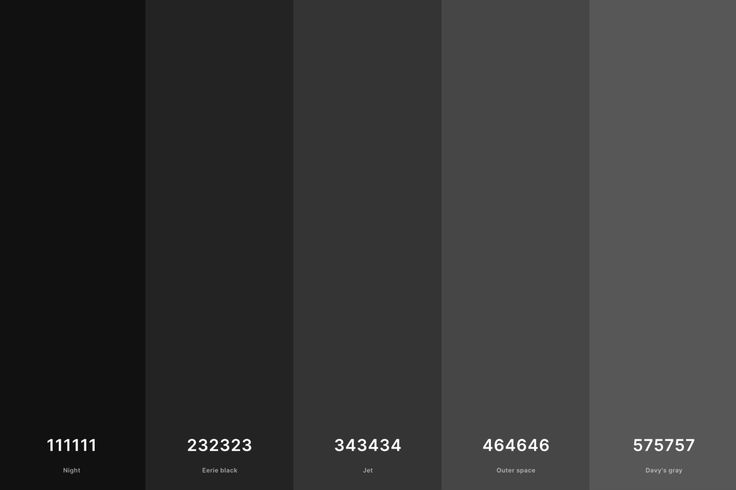

The '80% Black' Misconception
One might hear #333333 referred to as '80% black'. This can be misleading because it suggests that the color is a result of dialing down the intensity of the plain black (#000000) hex code. In reality, it's not about taking away from black; it's about blending just the right amount of red, green, and blue to create a unique shade of gray. Labeling it '80% black' ignores the complexity of the color's makeup and the uniqueness of its hue.
Even differentiated by the smallest increment, the RGB value brings significant changes to a color. Therefore, it makes more sense to describe #333333 as 20% intensity of red, green, and blue, rather than 80% black.
#333333 in Web Design: Style and Functionality
#333333 isn't just another gray in the vast palette. It's earned its place in web design due to its versatility and effectiveness in a wide array of applications.


Though typically associated with dark and minimalist design trends, #333333 has a warm, inviting quality that makes it an excellent choice for creating contrast. Pairing it with a crisp white (#FFFFFF) or a soft gray (#CCCCCC) can bring balance and elegance to any layout. It's also a preferred choice for text, offering superior readability compared to its darker or lighter counterparts.
#333333 in Accessibility
More than aesthetics, #333333 is commendable for its accessibility features. The Web Content Accessibility Guidelines (WCAG) recommend a contrast ratio of 4.5:1 for normal text and 3:1 for large text to ensure readability for people with visual impairments. #333333 easily meets these criteria when paired with sufficiently contrasting colors, making it a responsibility-friendly choice for web designers.
Moreover, the color is neurologically restful to the eye, which can increase user engagement and reduce eye strain for prolonged use.


#333333 in Branding
Many successful brands aren't afraid to leverage the #333333 color. It's found in the logos of Apple, Xbox, and multiple high-street fashion brands. The color's association with sophistication and professionalism appeals to a broad range of customers, lending a sense of maturity and longevity to any brand.
Nevertheless, like any color, #333333 won't suit every brand, especially those aiming to convey playfulness, energy, or excitement. Understanding your audience and choosing #333333 deliberately and thoughtfully can maximize its branding power.
Incorporating #333333 into your site could result in a timeless, polished, and sophisticated finish that stands the test of time. Its neutrality works equally well in both modern websites and vintage-inspired designs, Bryan Stearns
Related Articles

Jet Black Hex Code: #000000 - Ultimate Black Shade
The term "jet black hex code" might seem like a curious blend of the tangible and digital worlds, but it's a fascinating intersection worth exploring. In the...

Christmas Green Color Code: #Hex Value for Festive Designs
Adding a touch of green to your digital Christmas decorations? You're in luck! With the power of HTML and CSS, you can create vibrant, festive hues to bring...

Black Russian Cocktail Recipe
The Black Russian, a versatile and timeless cocktail, has captivated imbibers with its striking appearance and smooth taste since its inception. This iconic...

Gmail Logo PNG Black
When discussing the Gmail logo, one might wonder about its various renditions across different color schemes. Black is a popular choice among users who prefer...

Hex Code for Rainbow: Unleash Colorful Vibes
The vibrant and enchanting rainbow has long captivated humans, inspiring art, science, and even color theory. In the digital realm, this wonder of nature...

Black Rose PNG
The allure of the black rose has captivated humans for centuries, and it's no surprise that this enigmatic flower has made its way into the digital realm as a...