Bird of Paradise Transparent: See-Through wonder
The Bird of Paradise flower, indigenous to South Africa, is renowned not only for its exotic beauty but also for its unique transparency. This captivating plant, scientifically known as Strelitzia reginae, is a popular choice for gardens and homes due to its stunning appearance and intriguing characteristics.
One of the most distinctive features of the Bird of Paradise flower is its sheer, semi-transparent petals. This transparency lends an ethereal quality to the flower, making it stand out in a garden filled with vibrant hues.
The Anatomy of the Bird of Paradise Flower
To understand the transparency of the Bird of Paradise flower, one must first explore its intricate structure. The flower emerges from a spike atop a tall, feathery leaf. It's composed of three petals and three sepals, with the petals being the large, showy part that captures the eye.


Here lies the secret to the flower's transparency. The petals, while appearing solid, are actually semi-transparent. This is because they are composed of a thin layer of stagione cells, which refract light, creating the illusion of transparency.
Striking Colors Thanks to Transparency
The transparency of the Bird of Paradise flower also plays a significant role in its stunning color palette. While the flower is often associated with vibrant oranges and blues, the transparent petals allow for a mesmerizing interplay of light and color.


The transparent petals scatter light, creating a dazzling display of colors as they reflect off the flower's surface. This scattering effect is most pronounced under sunlight, giving the Bird of Paradise its fabulous, semi-translucent glow.
Fascinating Light Reflection Properties
The transparent petals of the Bird of Paradise flower also possess unique light reflection properties. When light hits the petals, it is reflected back at different wavelengths, creating a iridescent effect. This reflection even changes as the angle of the light shifts, making the flower's color appear to shift and shimmer.
This phenomenon is a result of the individual cell structures within the petals, which act like tiny prisms, refraction light in a way that creates the striking, shifting colors of the Bird of Paradise flower.


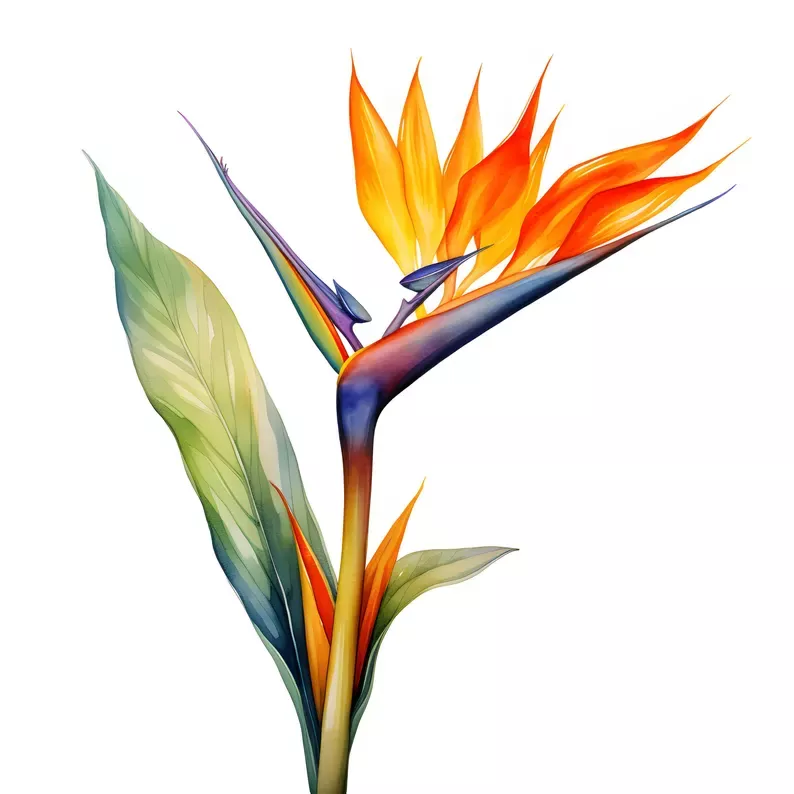

The Bird of Paradise: More Than Meets the Eye
Despite its simple structure, the Bird of Paradise flower possesses a complex internal architecture that gives rise to its remarkable transparency. This delicate interplay between light and structure results in a flower that is not only beautiful but also incredibly intriguing from a scientific perspective.
The Bird of Paradise flower serves as a reminder that sometimes, what appears to be a simple, ornamental plant can hold fascinating secrets just beneath the surface.
Gardening with the Bird of Paradise Flower
Gardeners throughout the world value the Bird of Paradise flower for its resilience and beauty. While it thrives in warm climates, it can also be cultivated indoors in cooler regions. Its height and striking plumage-like leaves make it an excellent addition to any garden, providing both color and texture.


But it's the flower's unique transparency that truly sets it apart. Whether you're an avid gardener or simply appreciate the beauty of nature, the Bird of Paradise flower is a plant worth investigating further.
The Bird of Paradise in Culture and Mythology
Beyond its physical characteristics, the Bird of Paradise flower holds cultural significance in many regions. In African folklore, the Bird of Paradise is a symbol of beauty and freedom. In certain South African traditions, young girls are gifted flowers to mark their transition into womanhood.
Its scientific name, Strelitzia reginae, also pays tribute to its cultural importance. It was named in honor ofQueen Charlotte of Mecklenburg-Strelitz, wife of King George III of the United Kingdom.
As you marvel at the Bird of Paradise flower, you're not just admiring a beautiful bloom, but also connecting with a rich cultural heritage.
So, the next time you see a Bird of Paradise flower, pause to appreciate its delicate, semi-transparent petals, and let it remind you of the wonder hidden in the everyday world around us.
Related Articles
Bird of Paradise: See Through Beauty
Fast becoming a staple in modern interior design, the Bird of Paradise transparent fabric is increasingly recognized for its unrivaled blend of aesthetics and...

Clear Tongue Gif: Transparent & See-Through Animations
Ever found yourself searching for a tongue-twisting animated image, or 'gif', but struggled to find one that perfectly fits your needs? You're not alone...

Transparent Facepalm Emoji: See-Through, High Quality
The facepalm emoji, � fach, has transcended its digital borders to become a universal symbol of exasperation and disbelief in the 21st century. Often used to...

Bone Transparent Background: See-Through Design
Ever found yourself in need of a bone-like graphic for your project but struggled with a white background blocking your design's transparency? Enter the...

Transparent Christmas Lights Border: See-Through Magic for Your Holidays
Imagine transforming your living space into a winter wonderland with the touch of a button. Transparent background Christmas lights borders have emerged as a...

Transparent Tweety Bird PNG: High-Quality & Free for Download
Looking for high-quality, transparent Tweety PNG images? You've come to the right place! In this article, we explore the world of Tweety PNG transparent...